

- Wired Passive
- Motion Detector
- Passive Infrared Motion Detector
৳3,650
Alarm Accessories price in Bangladesh starts from ৳2,500 to ৳3,650; depending on brand, capacity and features. Buy best quality Alarm Accessories from renowned brands at the Verbex Bangladesh online shop, and browse below to place an online order.
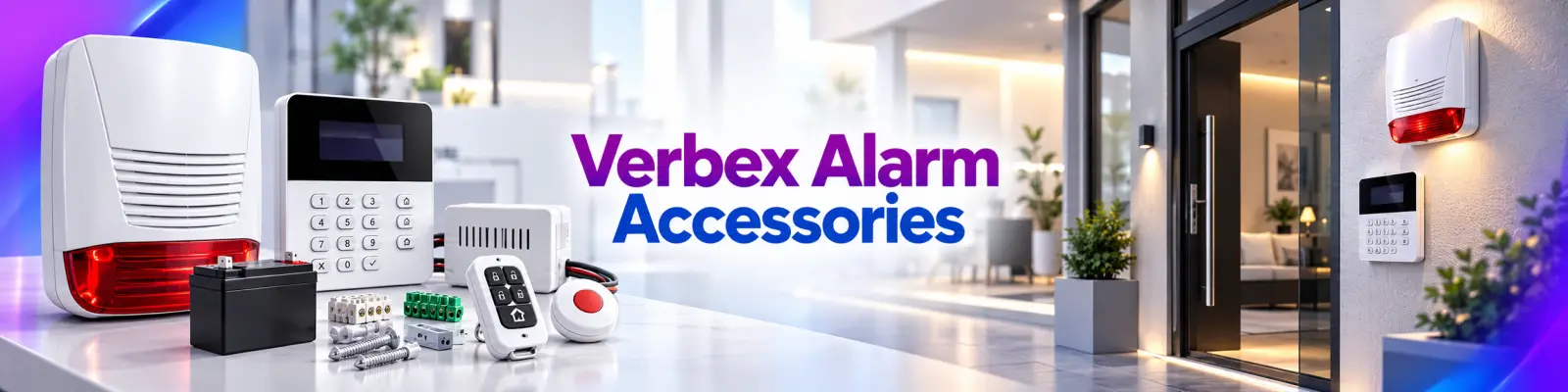
Verbex Alarm Accessories for residential, commercial, office, retail, and warehouse security alarm installations. Find compatible alarm sirens, strobe indicators, keypads, backup batteries, power supplies, remote controls, mounting accessories, connectors, and other security system components. Compare available products by alarm panel compatibility, electrical requirements, installation type, communication interface, and verified specifications to select suitable accessories for your security system.
Showing 1 to 2 of 2 products
৳3,650
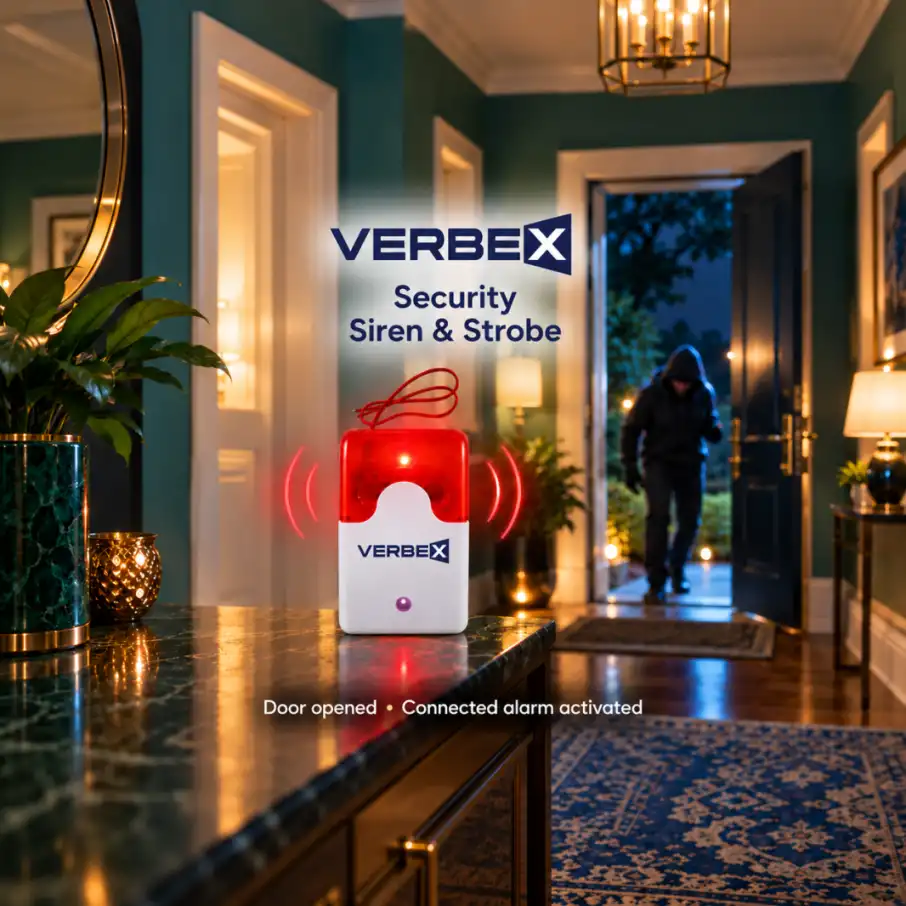
৳2,500
A security alarm system depends on more than its main control panel. A complete installation may require alarm notification devices, user control equipment, backup power components, connection accessories, mounting hardware, and compatible expansion modules.
The correct accessories help the system operate according to its intended design, support convenient daily use, and simplify maintenance.
Verbex Alarm Accessories is a professional product category for customers exploring components used with compatible burglar alarm systems, intrusion detection equipment, and electronic security installations.
The exact product range, functionality, and compatibility depend on the available models.
Alarm accessories are supporting components used to install, operate, extend, power, or maintain an electronic alarm system.
They may include sirens, warning lights, keypads, remote controls, power supplies, batteries, connection devices, and mounting equipment.
Not every accessory works with every alarm panel.
An alarm control panel receives and processes information from compatible security devices.
Accessories may provide audible warnings, user interaction, backup power, or additional connection options.
Selecting the correct components helps maintain the intended operation of the security installation.
Common categories include audible alarm devices, visual indicators, control interfaces, power equipment, wiring accessories, communication modules, and installation hardware.
The exact components required depend on the system architecture.
An alarm siren is designed to produce an audible warning when activated by a compatible system.
Sirens may be installed indoors or outdoors, depending on their design.
Sound output, operating voltage, current consumption, and environmental protection must be verified.
Indoor sirens may be used in residential or commercial alarm installations.
They can provide a local audible notification when the alarm system activates them.
Installation should consider the building layout and the required warning arrangement.
Outdoor sirens are designed for appropriate exterior conditions.
They may require weather-resistant enclosures and suitable mounting hardware.
Environmental ratings and electrical compatibility should be checked before installation.
A strobe indicator provides a visual warning when activated.
It may be used alongside an audible alarm device.
Flash characteristics, voltage, installation requirements, and compatibility vary by model.
Some alarm accessories combine audible and visual warning functions in one enclosure.
These devices may be useful in selected security installations.
However, their operation depends on the supported control interface and electrical requirements.
An alarm keypad allows authorized users to interact with a compatible security alarm system.
Depending on the system, users may arm or disarm selected areas, enter codes, or view status information.
Keypad functions vary by model and alarm panel.
Wired keypads connect to compatible alarm panels using physical cabling.
They may be suitable for permanent security installations.
Communication protocols, wiring configuration, and power requirements must match the panel.
Wireless keypads communicate with supported alarm panels or receivers through compatible radio protocols.
They may reduce the need for control wiring.
Pairing, range, batteries, and compatibility should be verified.
Some alarm systems support handheld remote controls.
Depending on the product, a remote may provide selected arming, disarming, or programmable control functions.
A remote control must use the supported communication method and authorization procedure.
A panic button can provide a manually initiated alarm input to a compatible security system.
It may be used in selected residential or commercial applications.
The resulting response depends on system programming and monitoring arrangements.
Some systems support dedicated manual activation devices.
These should be selected according to their intended security purpose.
A burglar alarm panic device must not automatically be treated as a certified fire alarm manual call point.
A backup battery may help power a compatible alarm system during an interruption to its primary supply.
Battery chemistry, voltage, capacity, charging requirements, and enclosure suitability must match the system.
Backup duration should never be assumed without calculation and verification.
A suitable power supply provides electrical power to compatible alarm equipment.
The required voltage, current capacity, regulation, and protective features depend on the connected devices.
Incorrect power equipment can damage the system or create hazards.
Some alarm installations include charging circuits or compatible battery maintenance equipment.
These components must match the battery type and system design.
Charging equipment should not be substituted without technical verification.
Certain systems use external transformers or power adapters.
Input and output ratings, electrical isolation, connector type, and local power requirements must be considered.
Only suitable equipment should be used.
A relay module may provide an electrical switching interface for compatible alarm equipment.
It can be used for defined control functions when supported by the system.
Contact ratings and electrical isolation requirements must be observed.
Some alarm systems support expansion modules for additional inputs, outputs, or other functions.
Expansion capabilities are highly system-specific.
Modules should be selected using verified manufacturer compatibility information.
A wireless receiver may allow a compatible alarm system to communicate with supported wireless devices.
Frequency, protocol, pairing, supervision, and capacity requirements must be verified.
A receiver is not universally compatible with all wireless sensors.
Certain alarm panels support communication modules for remote reporting or monitoring.
Available technologies and services depend on the module and system.
Internet, cellular, or application-based communication must not be assumed without verification.
Wired security installations may require suitable cable, connectors, terminals, and cable-management materials.
Cable selection should account for the electrical requirements and installation environment.
Good cable management supports maintenance and fault identification.
Terminal blocks and connectors can help organize electrical connections.
They should be selected according to conductor size, current rating, and installation requirements.
Loose or unsuitable connections may affect system reliability.
Mounting accessories may be needed for sirens, keypads, control equipment, or other devices.
The hardware should match the mounting surface and equipment design.
Secure installation helps reduce accidental movement and damage.
Some installations use dedicated enclosures for control equipment, power supplies, or connection components.
Enclosures should provide appropriate physical and environmental protection.
The required design depends on the installation.
Certain alarm components support tamper detection.
This may help identify specified interference with a device or enclosure.
Tamper functionality depends on the accessory and compatible panel configuration.
Residential systems may require indoor sirens, keypads, remote controls, backup batteries, and installation accessories.
The correct selection depends on the alarm system design and household requirements.
Offices may use accessories to support alarm notification, authorized control, and power continuity.
The system should be configured around working hours and access procedures.
Retail shops may require audible warning devices, control interfaces, and backup power components for compatible intrusion alarm systems.
These accessories are different from electronic article surveillance tags and detection gates.
Warehouse installations may require suitable sirens, communication components, power equipment, and mounting hardware.
Large spaces and industrial conditions should be considered during system design.
Commercial buildings may contain multiple alarm areas and equipment locations.
Accessory selection should consider system architecture, operational needs, and maintenance access.
Wired accessories use physical electrical connections.
Wireless accessories communicate through supported radio technologies.
Neither type should be considered universally superior; the appropriate choice depends on the application.
Compatibility is one of the most important selection criteria.
Even accessories with similar appearance may use different voltages, interfaces, communication protocols, or control logic.
Manufacturer documentation should be checked before purchase.
Intruder alarm accessories should not automatically be used in life-safety fire alarm installations.
Fire alarm equipment may require specific approvals, supervision, and certified compatibility.
Only appropriately approved components should be used for regulated fire alarm functions.
Before installation, identify the alarm panel model and the required accessory functions.
Confirm power requirements, supported connections, mounting locations, and environmental suitability.
Installation should follow manufacturer instructions and applicable electrical requirements.
After installation, test each accessory according to the approved system procedure.
Check audible and visual notification, keypad operation, remote controls, power supplies, and backup arrangements where applicable.
Any faults should be corrected before the system is relied upon.
Alarm accessories require periodic inspection and maintenance.
Batteries, connectors, mounting hardware, and exposed devices should be checked as appropriate.
Replacement parts must be compatible with the existing system.
Start with the exact alarm panel and system architecture.
Identify whether you need notification devices, user controls, power equipment, expansion components, or installation hardware.
Then compare verified electrical ratings, communication interfaces, environmental suitability, mounting requirements, and manufacturer compatibility.
Verbex Alarm Accessories is a relevant category for security installers, property managers, homeowners, and commercial organizations seeking components for electronic alarm installations.
Suitable accessories can support the intended operation, maintenance, and usability of compatible security systems.
Explore available Verbex alarm accessories and select products based on documented specifications and installation requirements.
| Product | Price |
|---|---|
| Verbex VT-EL55 Wired Passive Infrared Motion Detector | ৳3,650 |
| Verbex VT-APS103 Wireless Portable Indoor Sound & Light Siren | ৳2,500 |