
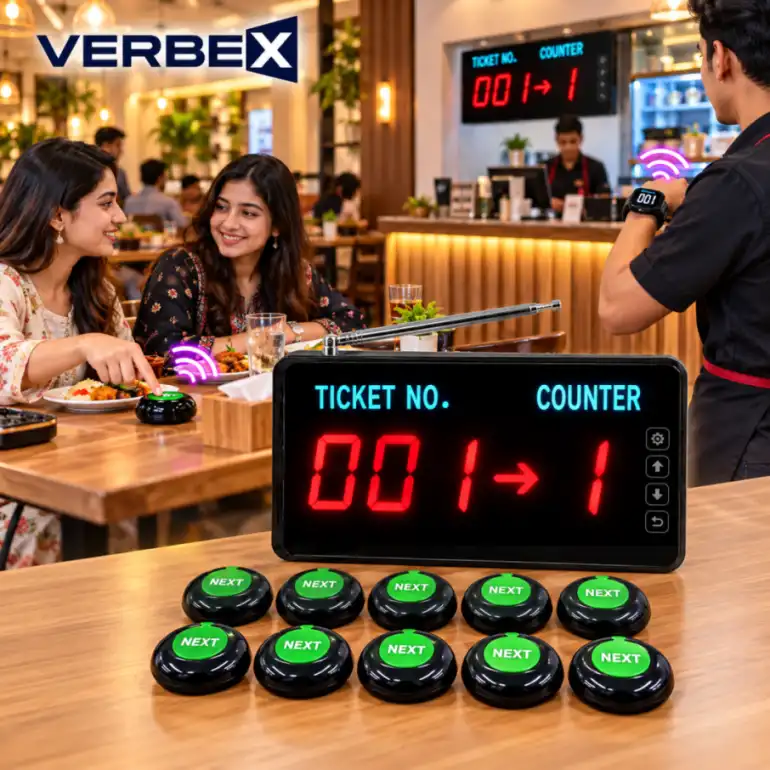
- Buzzer
- Buzzer Perfect
- Restaurant
Request a quote
Looking for the latest Window Intercom price in Bangladesh? Prices depend on brand, capacity and features. Browse the range below and ask Verbex Bangladesh for a quotation on the products you need.
Explore Verbex Window Intercom Systems for clear two-way voice communication across glass partitions, service windows, and protective counter barriers. Suitable applications include bank teller counters, hospital reception desks, ticket booths, cash counters, security offices, and customer service windows. Compare available Verbex counter intercom equipment by verified microphone and speaker performance, communication mode, volume adjustment, noise handling, installation method, power requirements, and compatibility to select a suitable communication solution for your service environment.
Showing 1 to 6 of 6 products
Request a quote
Request a quote
Request a quote
Request a quote
Request a quote
Request a quote
Clear communication is essential wherever staff members interact with customers through glass windows, protective partitions, or enclosed service counters. Banks, hospitals, ticket offices, payment counters, and security facilities often use physical barriers to organize service areas or separate staff from visitors.
Although these barriers serve practical purposes, they can make ordinary conversation more difficult. Speech may sound muffled through thick glass, while background noise can further reduce clarity.
A properly selected window intercom system provides an electronic communication path between the people on opposite sides of the barrier.
Verbex Window Intercom System is a professional audio communication equipment category for organizations looking for counter intercoms, bank teller communication systems, and two-way voice solutions for service windows.
The actual performance of a system depends on its microphones, loudspeakers, audio processing, communication mode, installation, and operating environment.
A window intercom system is an audio communication device designed to help two people speak across a physical barrier.
It commonly uses a microphone and speaker on the staff side and a compatible audio unit on the customer side.
The system captures speech from one side and reproduces it on the other.
Depending on the product, communication may operate continuously or require a talk button.
The exact functions depend on the equipment.
When a person speaks into the microphone, the system converts their voice into an electrical signal.
The signal is processed or amplified and transmitted to the speaker on the opposite side of the partition.
The second person can respond through the corresponding microphone.
This arrangement allows communication without requiring an opening large enough for direct speech.
However, sound quality depends on microphone placement, volume settings, room noise, and equipment design.
A typical installation may include a staff-side desktop unit, a customer-side speaker and microphone assembly, a connection cable, and a power supply.
Some models use an integrated microphone and speaker housing.
Others provide separate audio components.
Additional functions may include volume controls, mute buttons, or external audio connections.
These features must be confirmed for the selected model.
Glass and protective barriers can reduce speech intelligibility.
Customers may need to repeat questions, and employees may struggle to hear responses.
An intercom can help overcome some of these difficulties by providing a dedicated audio path.
It may also reduce the need for people to raise their voices.
The effectiveness of the solution depends on correct installation and suitable equipment.
Banks often have teller counters separated from customers by glass or other protective barriers.
A counter intercom can help staff communicate about routine transactions and service instructions.
Microphone clarity and comfortable listening levels are important.
The system should also be easy to operate throughout the working day.
Organizations handling confidential information should consider speech privacy and appropriate operating procedures.
Hospitals and healthcare facilities may use glass partitions at reception, registration, and payment counters.
A window intercom can support communication between staff and visitors.
Clear speech is especially important when providing directions or administrative instructions.
However, healthcare environments also require attention to privacy, accessibility, and patient comfort.
Sensitive conversations should be handled according to applicable privacy policies.
Ticket counters may operate in transport terminals, entertainment venues, parking facilities, and other public locations.
The operator and customer may be separated by a protective window.
A suitable intercom can help exchange ticketing information and payment instructions.
Background noise should be considered when selecting microphones and speakers.
Cash collection points and payment counters often involve short but important conversations.
Staff may need to confirm amounts, explain procedures, or answer customer questions.
A counter intercom can support these interactions when direct speech is obstructed by a barrier.
Equipment placement should allow both parties to communicate naturally.
Security offices may communicate with visitors through a protected reception window.
An intercom can support routine visitor instructions and access-related communication.
However, a basic window intercom should not automatically be treated as a complete access control or emergency communication system.
Any integration with security equipment requires verified compatibility.
Customer service desks may receive frequent questions and requests.
Where a glass partition is installed, a window intercom can help staff and visitors communicate.
The system should provide comfortable audio levels and simple controls.
Clear signage and appropriate microphone placement may improve usability.
Thick glass and enclosed counters can block or distort normal speech.
An intercom transmits audio electronically between the two sides.
The glass thickness itself does not determine the required speaker power.
Room noise, microphone distance, acoustic reflections, and device performance should also be considered.
Two-way communication means both parties can speak and hear through the system.
However, there are different ways to implement this function.
Some devices support simultaneous conversation.
Others require one person to speak at a time or use a push-to-talk control.
Customers should verify the communication mode before purchase.
Full-duplex communication allows both sides to speak and listen simultaneously when the system supports it.
Half-duplex communication generally permits transmission in one direction at a time.
These approaches have different operational characteristics.
Neither mode should be assumed without checking the product specification.
Microphone quality is essential for intelligible communication.
A suitable microphone should capture speech clearly from the expected speaking position.
Sensitivity, directionality, distance, and background noise all affect performance.
An excessively sensitive microphone may also capture unwanted surrounding sounds.
Correct placement is as important as the microphone specification.
The speaker reproduces the voice from the opposite side of the partition.
It should provide sufficient clarity and comfortable volume for the environment.
Excessive volume can create distortion or acoustic feedback.
The best settings depend on the surrounding noise and the distance between the speaker and listener.
Some window intercom systems provide separate volume controls for staff and customer audio.
This can help accommodate different noise conditions.
However, the number and type of controls vary by model.
Staff should be trained to adjust the system without creating feedback or uncomfortable sound levels.
Service counters may be located in noisy public environments.
Some intercom systems include audio processing intended to reduce background noise.
Such functions can help under suitable conditions.
However, their performance depends on the technology and acoustic environment.
Noise reduction should not be assumed to eliminate all surrounding sound.
Feedback can occur when a microphone captures sound reproduced by a nearby speaker.
This may produce an unpleasant ringing or howling sound.
Microphone placement, speaker direction, volume settings, and audio processing can affect feedback.
Proper installation should minimize these risks.
Some communication systems use echo cancellation to reduce repeated audio.
However, not every window intercom includes this capability.
Echo cancellation and feedback suppression are related but different functions.
Customers should verify which audio processing features are supported.
The staff-side unit is commonly positioned on a desk or service counter.
It may include a microphone, loudspeaker, and operating controls.
A compact design can help preserve working space.
The unit should be positioned so staff can speak naturally without obstructing other counter activities.
The customer-side unit is typically mounted near the service window.
It may combine a microphone and loudspeaker in one enclosure.
The installation should make the speaking position obvious to visitors.
Mounting height and accessibility should be considered.
The unit should also be suitable for the expected cleaning and operating conditions.
Some customer-side audio units can be mounted directly to a glass partition using an approved attachment method.
Other models may require brackets or different mounting arrangements.
The correct method depends on the device and glass construction.
Installation should follow manufacturer guidance.
Improper mounting may damage equipment or compromise stability.
Many window intercom designs use a cable between the staff-side and customer-side units.
Power may be provided through an external adapter or another supported arrangement.
Cable length, connector type, and voltage requirements vary.
Customers should use the specified power supply and approved accessories.
Banking, healthcare, and administrative counters may involve sensitive information.
A window intercom can improve communication, but it does not automatically guarantee confidentiality.
Speaker volume, nearby listeners, recording features, and data handling policies should be considered.
Organizations should establish procedures appropriate to their privacy obligations.
Some visitors may have hearing, speech, or mobility difficulties.
Intercom placement and audio quality should be considered alongside accessible counter design.
A standard window intercom may not meet every accessibility requirement.
Additional assistive listening or communication arrangements may be necessary.
Some ticket booths or security counters operate near outdoor environments.
Equipment may be exposed to moisture, dust, temperature changes, or direct sunlight.
Not every window intercom is suitable for outdoor use.
Environmental protection ratings and installation limitations should be verified.
The best communication mode depends on the service workflow.
Continuous two-way conversation may be useful at busy counters.
Push-to-talk operation may suit other environments.
The available modes must be verified.
Staff training should reflect the system's actual operation.
Before installation, assess the counter layout, glass partition, speaking positions, and ambient noise.
Position the staff-side and customer-side units appropriately.
Route cables safely and connect the correct power supply.
Test speech clarity in both directions.
Check performance under normal operating noise conditions.
Window intercom equipment should be cleaned according to manufacturer instructions.
Microphone openings and speaker grilles should be kept free of obstruction.
Cables and connectors should be inspected periodically.
Staff should report distortion, intermittent audio, or power problems promptly.
If the system produces no sound, check the power supply, cable connections, mute settings, and volume controls.
If speech is unclear, inspect microphone placement and surrounding noise.
If feedback occurs, reduce excessive volume and review the positioning of audio components.
Repairs should follow manufacturer recommendations.
Begin by identifying the type of service counter and the number of communication points required.
Evaluate the glass partition, expected speaking distance, background noise, and available installation space.
Compare verified microphone performance, speaker output, communication mode, controls, power supply, and mounting requirements.
Consider privacy, accessibility, maintenance, and compatibility with any additional equipment.
Verbex Window Intercom System is a relevant product category for banks, hospitals, ticket booths, security offices, and customer service facilities seeking clearer communication through glass partitions.
A properly selected and installed system can help staff and customers exchange information without relying solely on speech through a barrier.
Explore available Verbex window intercom equipment, compare verified specifications, and choose a solution suited to your service environment.
| Product | Price |
|---|---|
| Verbex VT-K-100 K-2000C K-AB 1+10 System With Buzzer Perfect For Restaurant | Price on request |
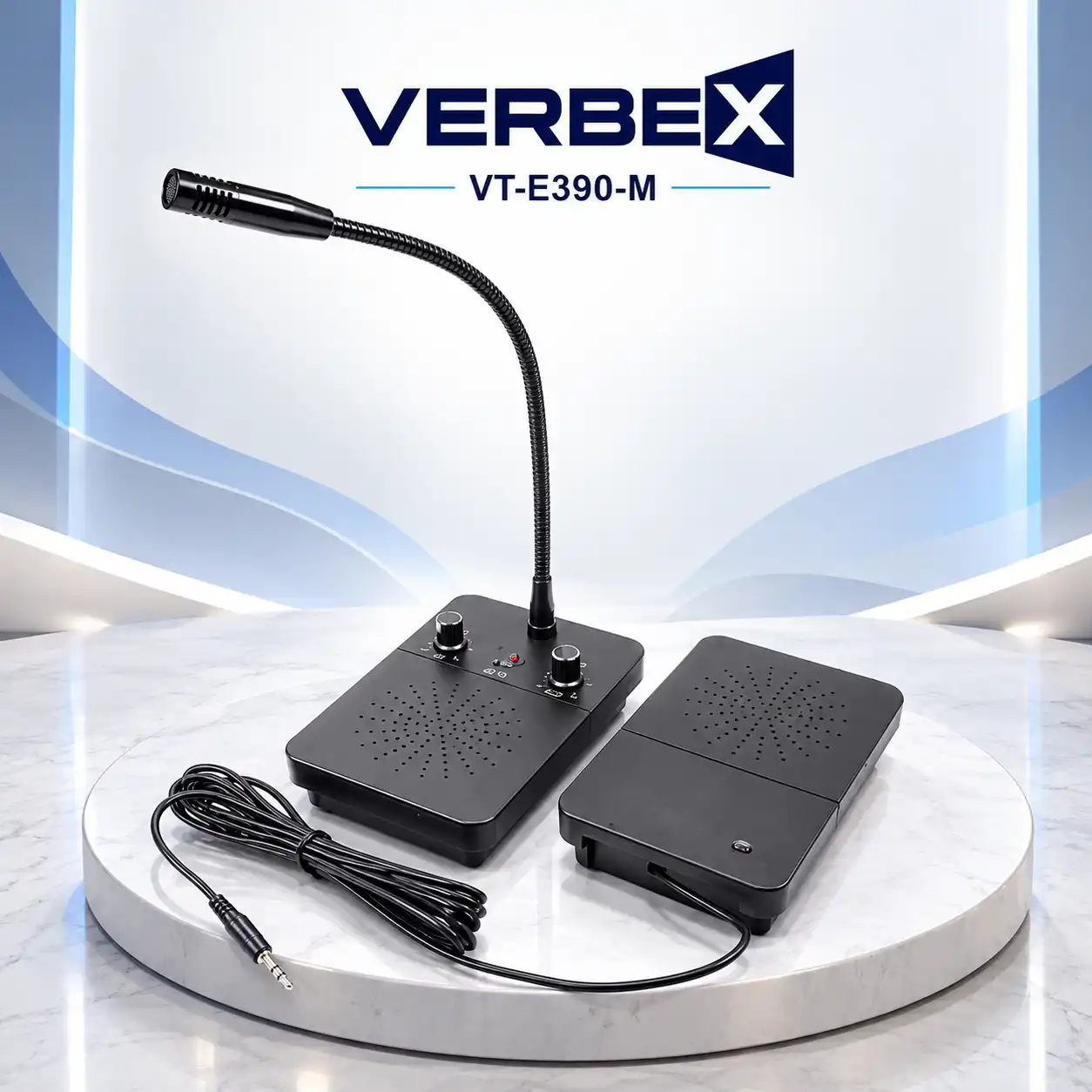
| Verbex VT-E390-M Window Intercom Device For Auditorium Hall | Price on request |
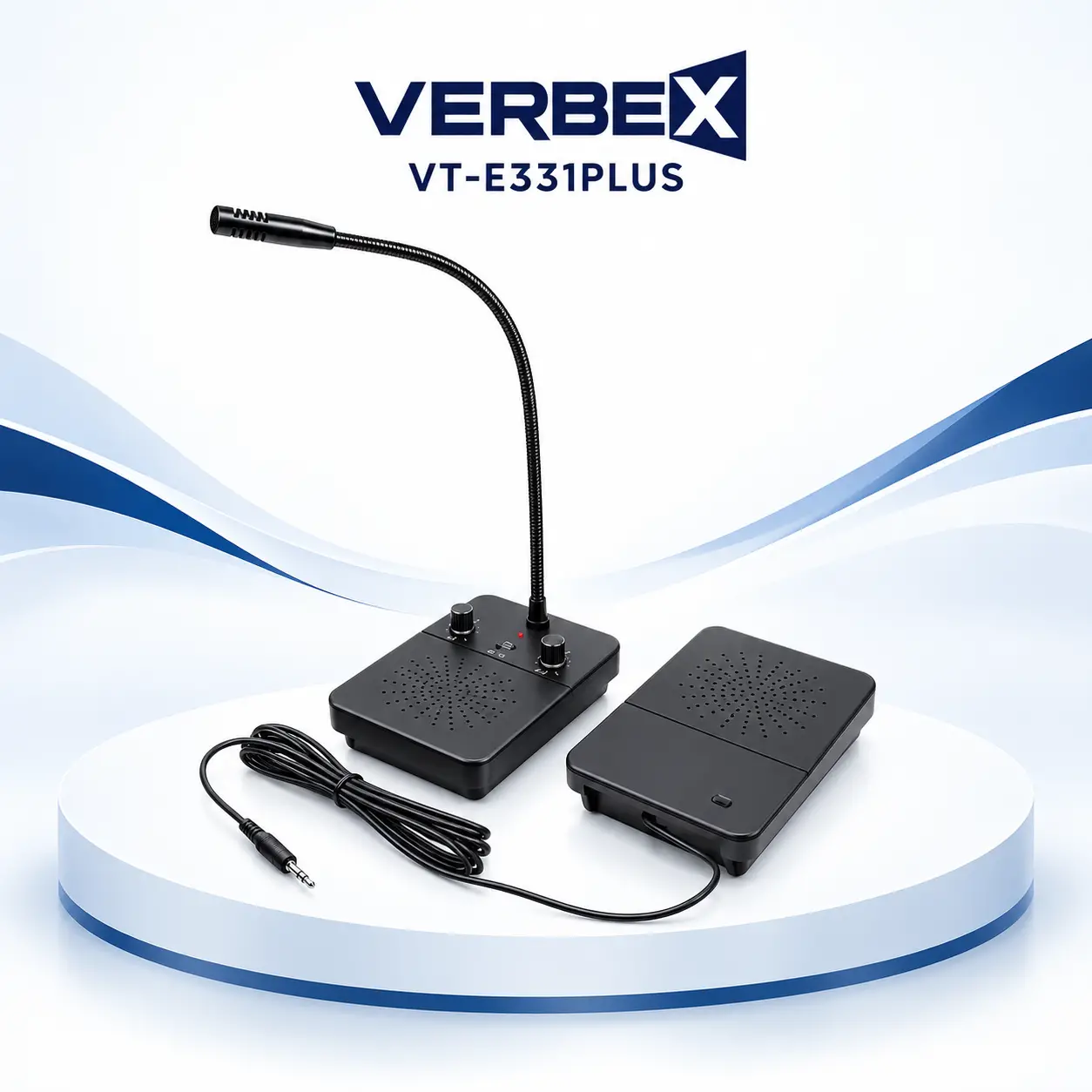
| Verbex VT-E331PLUS Top Noise-Free Window Intercom Device | Price on request |
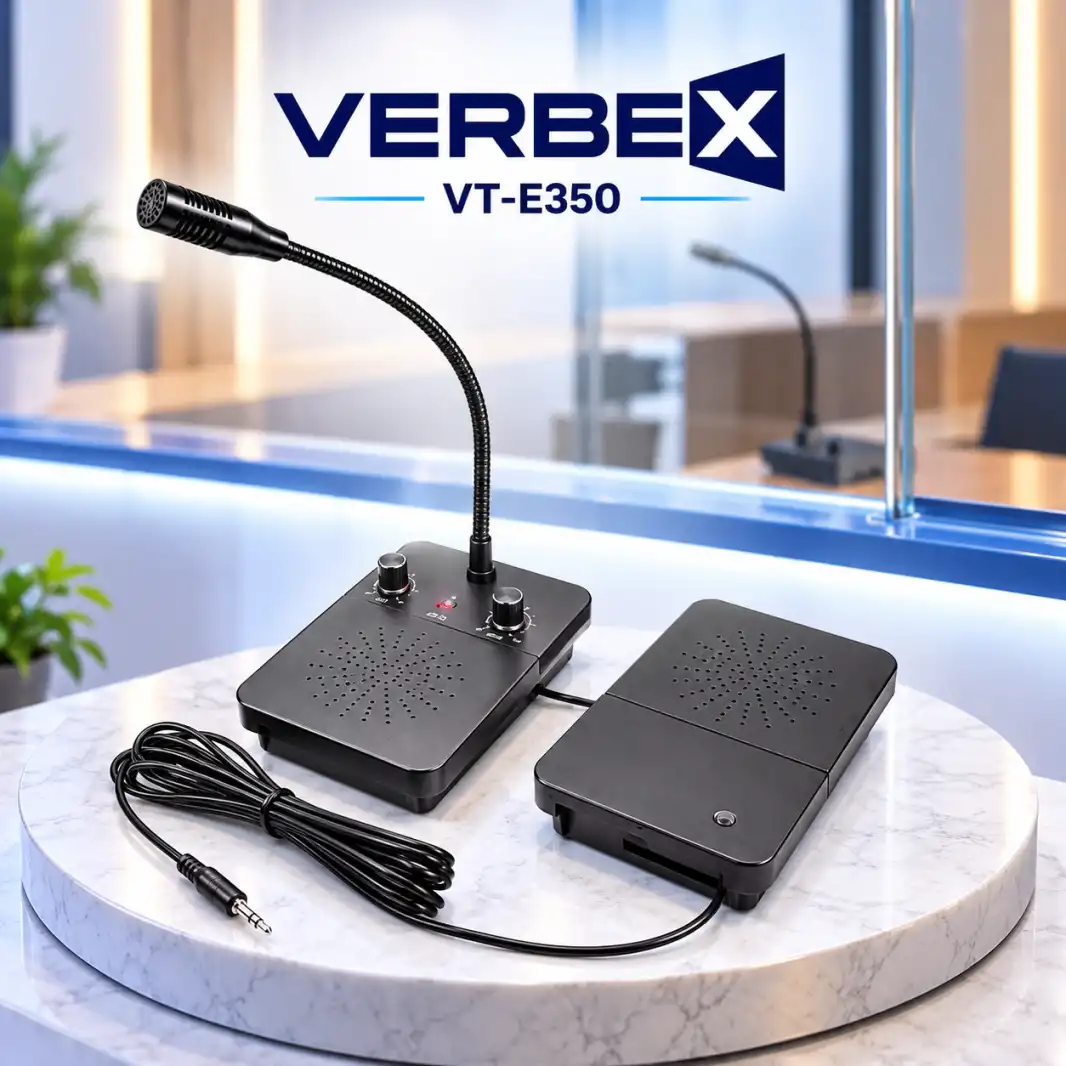
| Verbex VT-E350 Window Intercom Device For Hall Meeting | Price on request |
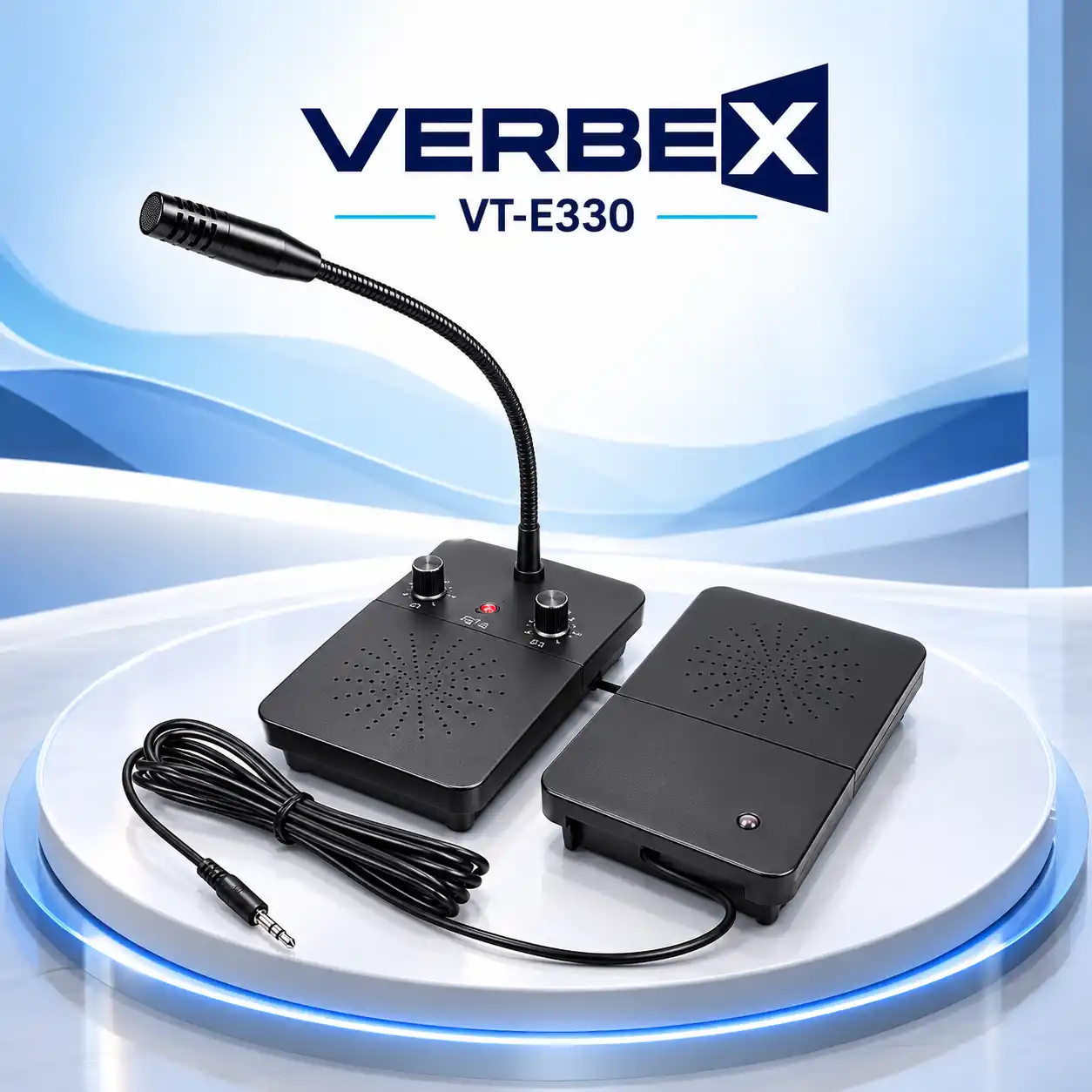
| Verbex VT-E330-Mute Window Intercom Unit | Price on request |
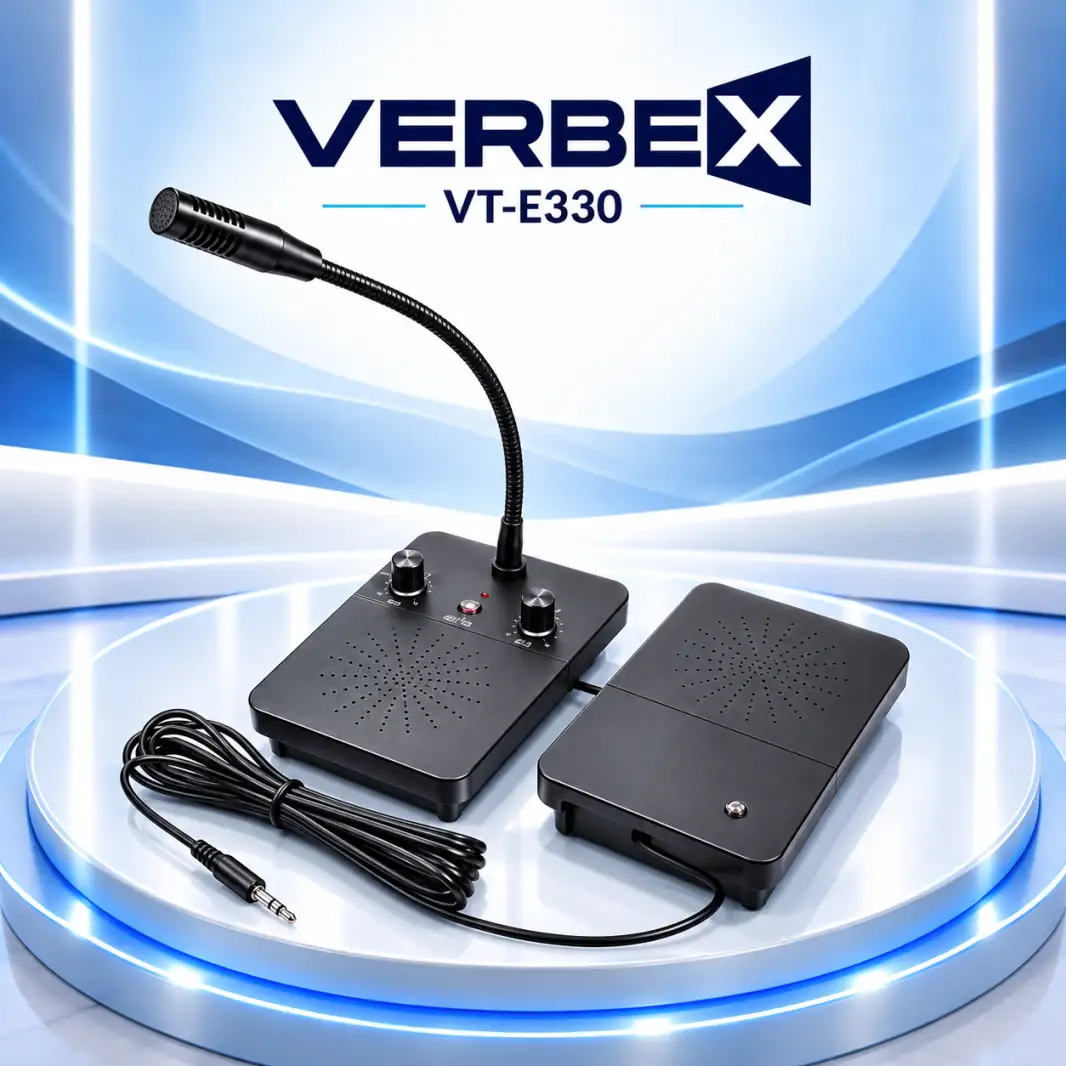
| Verbex VT-E330-Window Intercom Device For Factory And Speaking Hall | Price on request |