
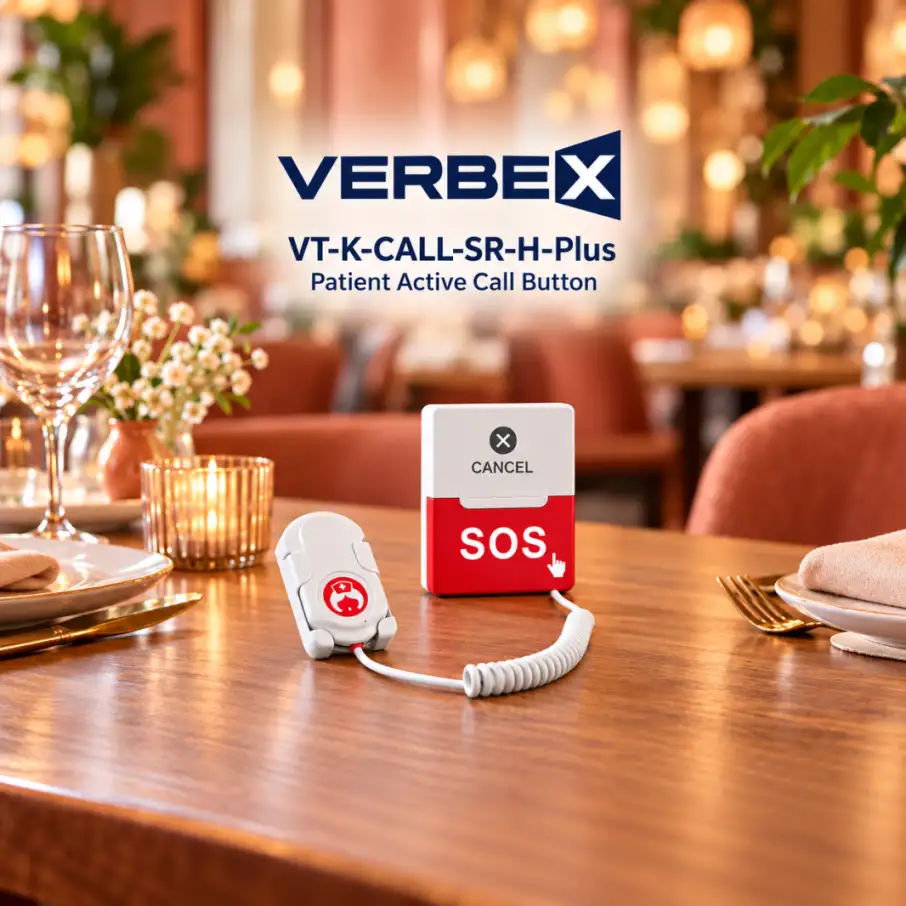
- Patient Active
- Active Call Button
- VT-K-CALL-SR-H-Plus
Request a quote
Looking for the latest Hospital call system price in Bangladesh? Prices depend on brand, capacity and features. Browse the range below and ask Verbex Bangladesh for a quotation on the products you need.
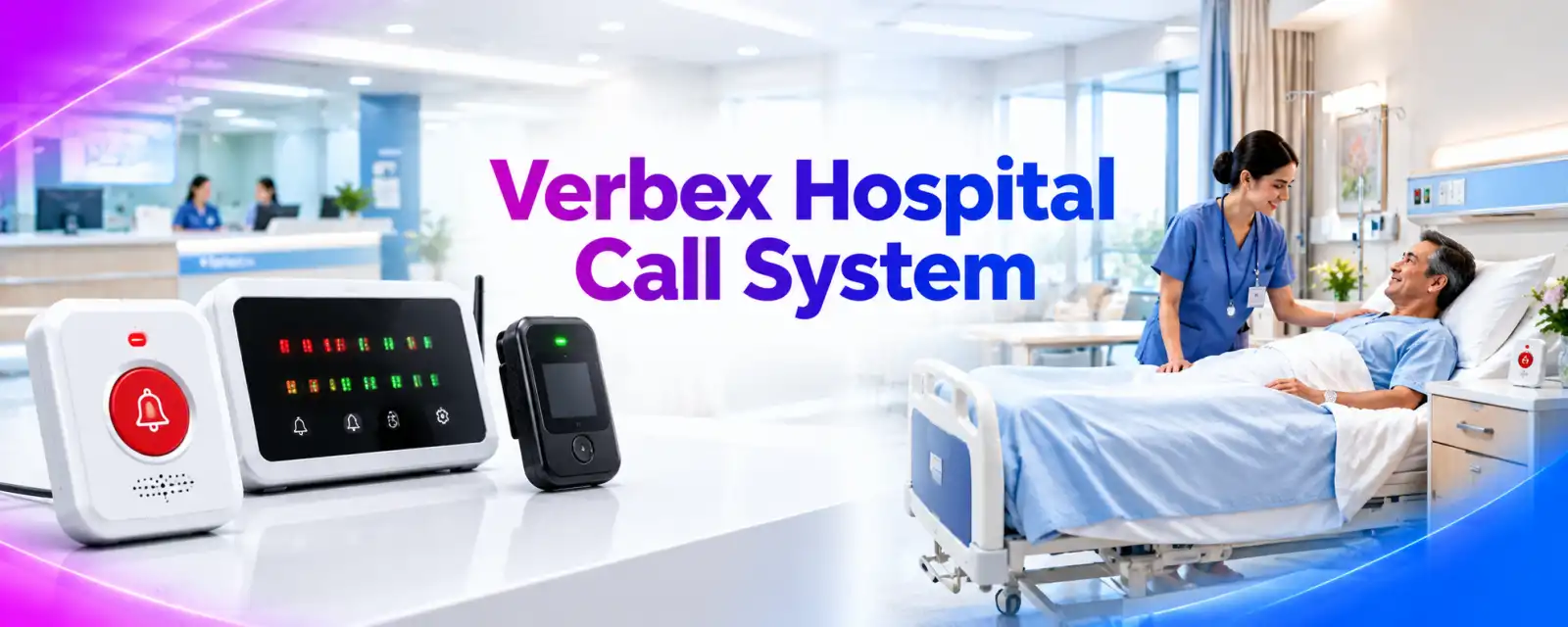
Explore Verbex Hospital Call Systems for organized patient assistance requests and communication with nursing staff in hospitals, clinics, nursing homes, and healthcare facilities. A suitable nurse calling system may allow patients to request help through bedside call buttons and notify designated staff using compatible nurse station displays or receivers. Compare available equipment by verified call functions, room identification, alert methods, wired or wireless connectivity, power requirements, installation compatibility, and applicable healthcare safety requirements. For critical patient-care applications, choose only systems with documented suitability and required regulatory compliance.
Showing 1 to 12 of 52 products
Request a quote
Request a quote

Request a quote
Request a quote

Request a quote
Request a quote
Request a quote
Request a quote
Request a quote

Request a quote
Request a quote
Clear communication between patients and healthcare staff is an essential part of hospital operations. Patients may need help with mobility, personal care, discomfort, or other routine assistance while staying in a hospital room or healthcare facility.
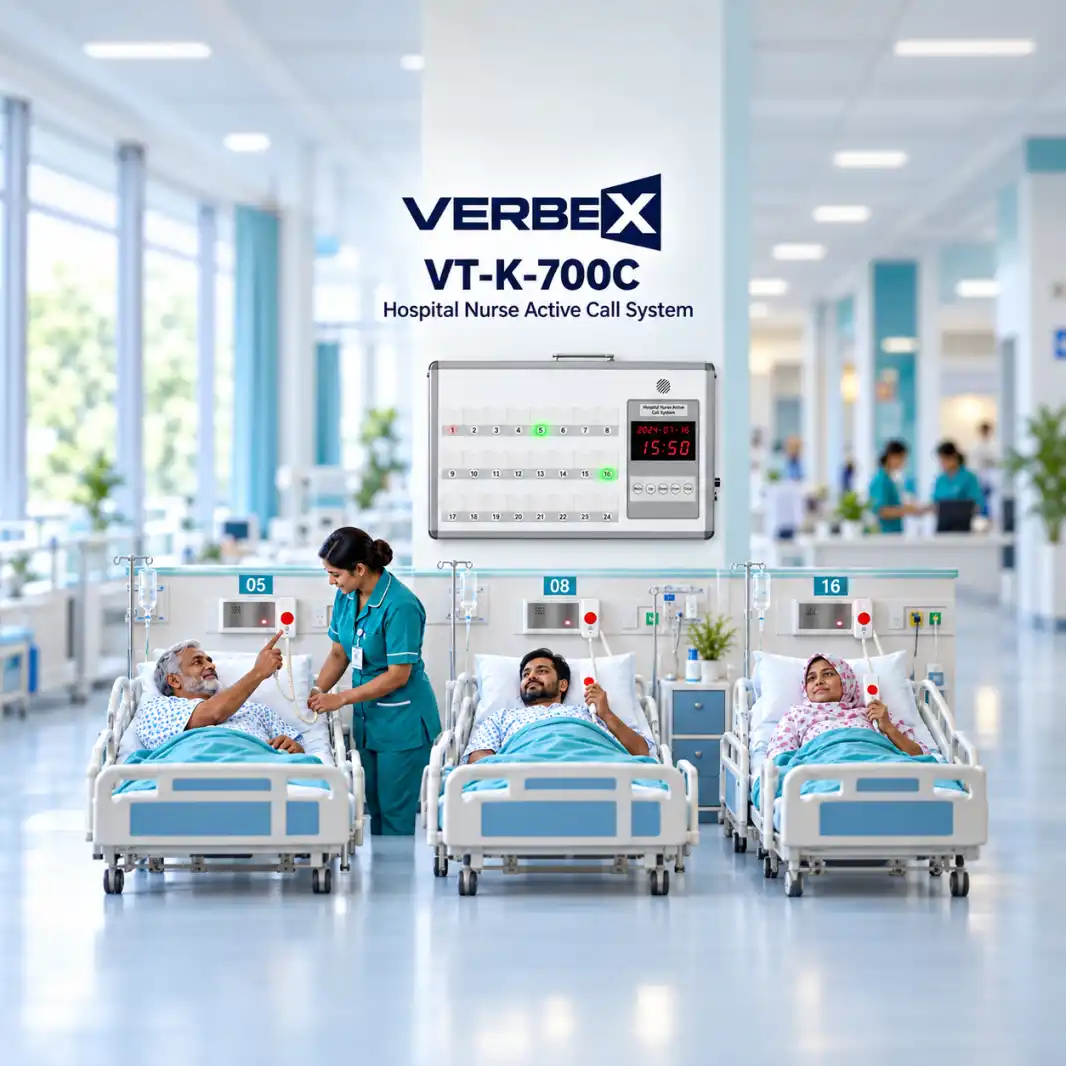
A properly designed hospital call system can provide a structured way for patients to request attention from nursing staff. Depending on the equipment, a patient may press a bedside call button while an appropriate receiver or nurse station display notifies designated personnel.
Verbex Hospital Call System is a category of hospital communication equipment intended for organizations exploring nurse calling, patient assistance alerts, bedside notification devices, and related healthcare communication solutions.
Actual product capabilities, reliability, and suitability for clinical use must be verified before selection.
A hospital call system is an electronic communication arrangement that enables patients or authorized staff to initiate assistance requests.
A typical configuration may include bedside call points, a central receiver, and notification equipment.
When a patient activates a call button, the system communicates the request to the designated receiving location.
The exact notification method depends on the equipment.
In a basic nurse calling arrangement, a patient activates a bedside button.
The transmitter or connected call point sends a signal to compatible receiving equipment.
A nurse station display or staff receiver then provides a notification.
Some systems may identify the room or bed associated with the call.
However, identification, acknowledgement, and cancellation functions vary by model.
A hospital calling installation may include bedside call buttons, patient handsets, corridor indicators, nurse station displays, staff receivers, and power accessories.
Other configurations may incorporate bathroom call points or communication panels.
Not every system includes every component.
All devices must be compatible with the selected system architecture.
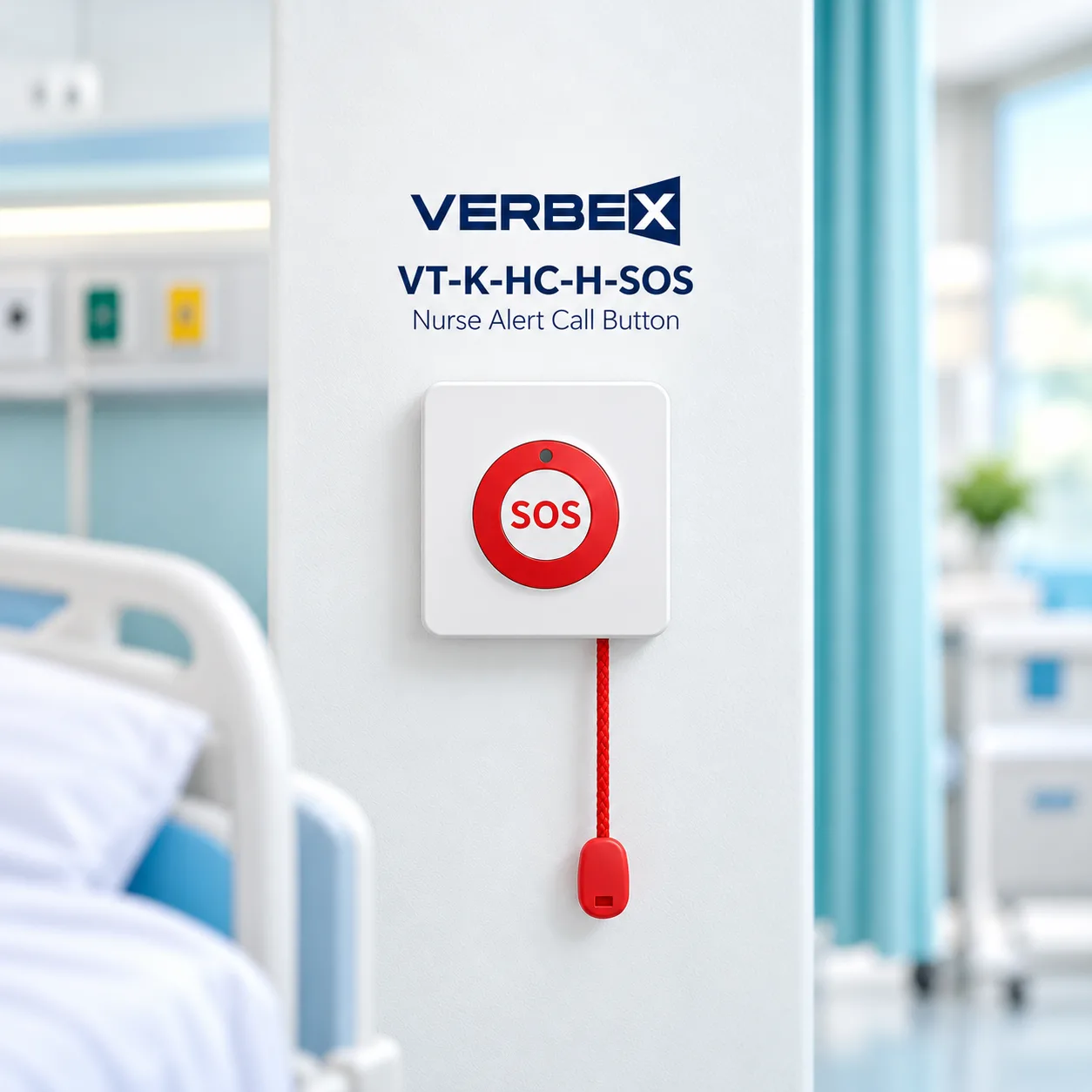
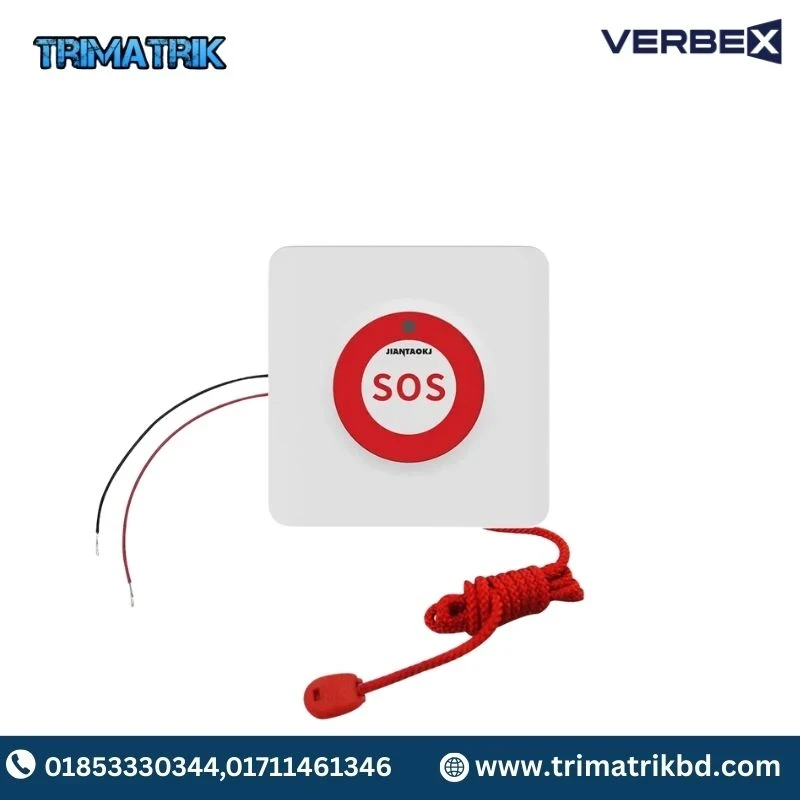
A bedside call button provides a convenient method for patients to request assistance.
It should be positioned within reach of the intended user.
Some devices are mounted beside the bed, while others may use a suitable handheld arrangement.
The design should be assessed for usability, cleaning, and accessibility.
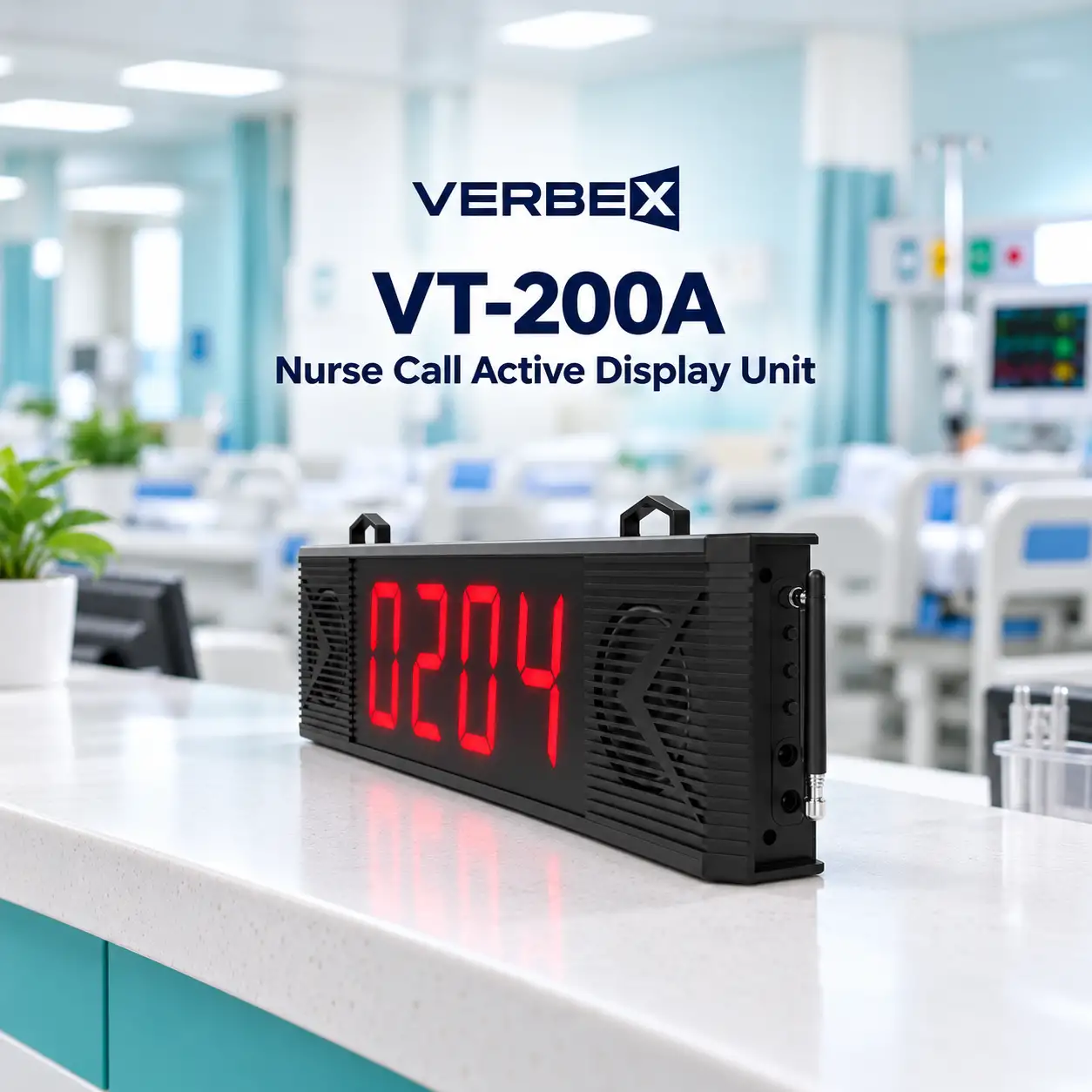
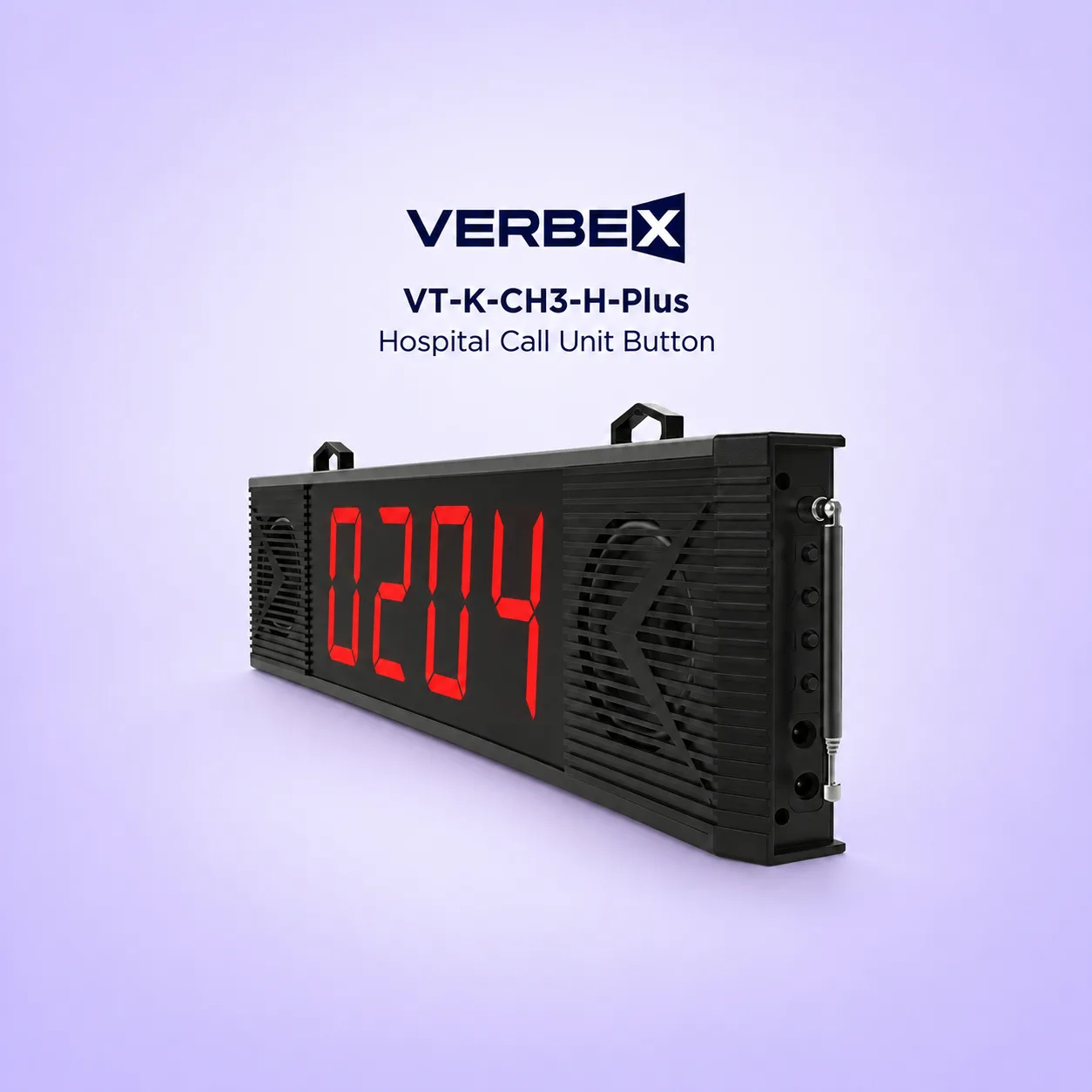
A nurse station display may provide a central location for viewing incoming assistance requests.
Depending on the system, the display may identify the room, bed, or call point.
Display capacity, notification priority, and acknowledgement options differ between products.
Healthcare facilities should verify these functions before purchasing.
Some patient calling solutions use wireless communication between call buttons and receiving devices.
Wireless equipment may simplify installation in certain facilities.
However, signal coverage can be affected by walls, medical equipment, building structure, and interference.
A site survey and documented reliability assessment are particularly important in healthcare settings.
Wired systems use physical connections between selected calling and receiving equipment.
They may be appropriate where permanent infrastructure is planned.
However, a wired connection alone does not guarantee clinical reliability.
Installation quality, power continuity, supervision, and applicable standards must also be considered.
Patient-to-nurse communication allows a patient to request attention without leaving the bed.
A basic calling device may transmit only an alert.
Two-way voice communication is a separate capability that requires supported hardware.
Facilities should not assume every nurse call product provides voice conversation.
Room or bed identification may help staff determine where assistance has been requested.
Some systems display assigned identifiers.
Others use simpler notification methods.
Correct device mapping is important.
Staff should test each call point and confirm that its displayed location matches the actual installation.
Patients may use a call system to request routine assistance with positioning, mobility, personal care, or other needs.
The alert provides a communication pathway.
It does not assess the patient's condition or determine the clinical urgency of the request.
Staff must continue following appropriate care procedures.
Hospital wards may contain several patient rooms and nursing stations.
A calling system can help organize notifications from designated locations.
The required system capacity depends on the number of beds, rooms, and staff receiving points.
Large installations may require professional system design.
General inpatient rooms are a common application for bedside assistance calling.
Call buttons should be accessible and understandable to patients.
Where a patient cannot operate a conventional button, the facility should assess suitable alternative assistance methods.
Private rooms may use individual call points connected to an appropriate receiving location.
The selected configuration should consider room layout, staff responsibilities, and patient needs.
Additional room controls or voice functions must be verified separately.
Some clinics and healthcare centers may need calling equipment for observation rooms, treatment areas, or other noncritical assistance workflows.
However, clinical suitability depends on the intended use.
A basic staff paging device should not be represented as a certified medical emergency system.
Residents of nursing homes or assisted-living facilities may need a convenient way to request staff assistance.
Suitable calling equipment can support communication.
Facilities should assess accessibility, response procedures, reliability, and backup arrangements.
Bathroom call points or pull-cord devices are available in some healthcare communication systems.
They may allow users to request assistance from a bathroom or accessible toilet.
However, not every hospital calling system supports such devices.
Installation location and accessibility requirements should be reviewed carefully.
Emergency calling requires particular attention to system suitability.
A routine assistance button should not automatically be treated as a life-safety alarm.
Critical applications may require documented alarm supervision, redundancy, power backup, priority handling, and compliance with applicable standards.
Clinical and technical stakeholders should approve the system before deployment.
Some advanced nurse call systems distinguish between different types of alerts.
However, priority handling is not universal.
Facilities must verify the supported alert categories and ensure that staff procedures match the system's actual capabilities.
Certain systems allow authorized staff to acknowledge an incoming request.
This may help indicate that a notification has been noticed.
However, acknowledgement does not necessarily mean that assistance has been completed.
Staff procedures should define how calls are handled and closed.
Some systems provide a cancellation or reset function.
The location and operation of this control vary by model.
Healthcare facilities should train staff to avoid clearing requests before appropriate action has been taken.
Hospital environments may require carefully selected notification methods.
Audible alerts can attract attention.
Visual indicators can provide additional information.
The alert should be noticeable to staff without causing unnecessary disturbance to patients.
Actual sound, light, and vibration functions depend on the equipment.
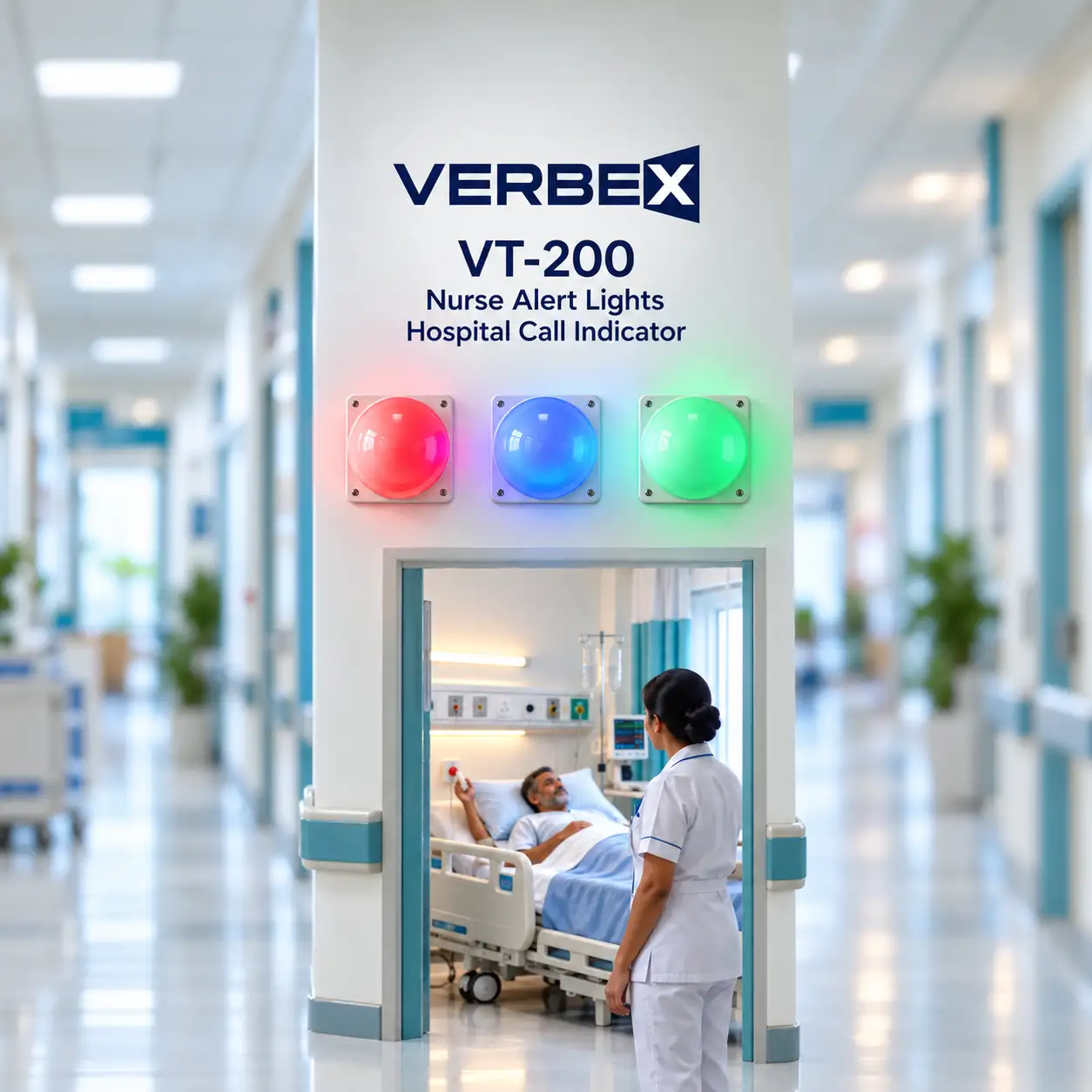
Some nurse calling systems support corridor lights or room indicators.
These may help staff identify the location of an active request.
However, corridor indicators are not included in every configuration.
Compatibility and mounting requirements should be verified.
Portable staff receivers may allow designated personnel to receive notifications away from a central station.
Supported alert types, battery requirements, and device capacity vary.
Portable paging should not be assumed to provide guaranteed delivery or emergency-grade reliability.
Hospitals contain walls, equipment, and infrastructure that may affect wireless communication.
Published range figures may reflect ideal conditions.
Coverage should be tested in patient rooms, corridors, nurse stations, and other intended areas.
Where reliable alarm delivery is clinically necessary, documented system performance is essential.
Power continuity is important for healthcare communication.
Some equipment requires mains power, while other devices use batteries.
Backup power availability varies by product.
Facilities should verify power failure behavior and any required backup provisions.
Patient-facing equipment should be suitable for the facility's cleaning procedures.
Call buttons and handsets may be touched frequently.
Cleaning products must be compatible with device materials.
Waterproof or disinfectant-resistant properties should not be assumed without manufacturer documentation.
Patients may have limited mobility, vision, hearing, or hand strength.
Calling equipment should be selected with these needs in mind.
Button position, activation force, visibility, and alternative access methods may be relevant.
Healthcare teams should evaluate accessibility during system planning.
Installation begins with identifying patient call points, receiving locations, and required communication pathways.
Devices should be positioned according to their intended use.
After configuration, each call point should be tested.
Location identification, alert behavior, and any supported acknowledgement or cancellation functions must be verified.
Nurses and other authorized employees should understand the calling workflow.
Training should cover receiving notifications, identifying the request location, responding appropriately, and reporting equipment faults.
Emergency escalation procedures must remain clearly defined.
Routine testing should include call buttons, displays, receivers, power supplies, batteries, and connections.
Facilities should maintain inspection and fault-reporting procedures appropriate to the intended use.
For clinical systems, maintenance should follow applicable standards and manufacturer requirements.
Some advanced nurse call platforms may support integration with hospital communication networks or management software.
However, basic calling equipment does not automatically integrate with hospital information systems.
Any integration requires documented compatibility, security assessment, and appropriate technical design.
Begin by defining the intended application.
Determine whether the facility needs routine assistance calling or a system approved for clinical emergency use.
Assess the number of rooms, beds, staff receiving locations, communication method, accessibility requirements, power continuity, and installation conditions.
Review documented specifications and applicable regulatory requirements before procurement.
Verbex Hospital Call System is a relevant product category for healthcare organizations evaluating patient assistance and staff notification equipment.
An appropriately selected solution can support structured communication between patients and designated healthcare staff.
Explore available Verbex hospital calling products, verify their documented capabilities, and select equipment suitable for the intended healthcare environment.
| Product | Price |
|---|---|
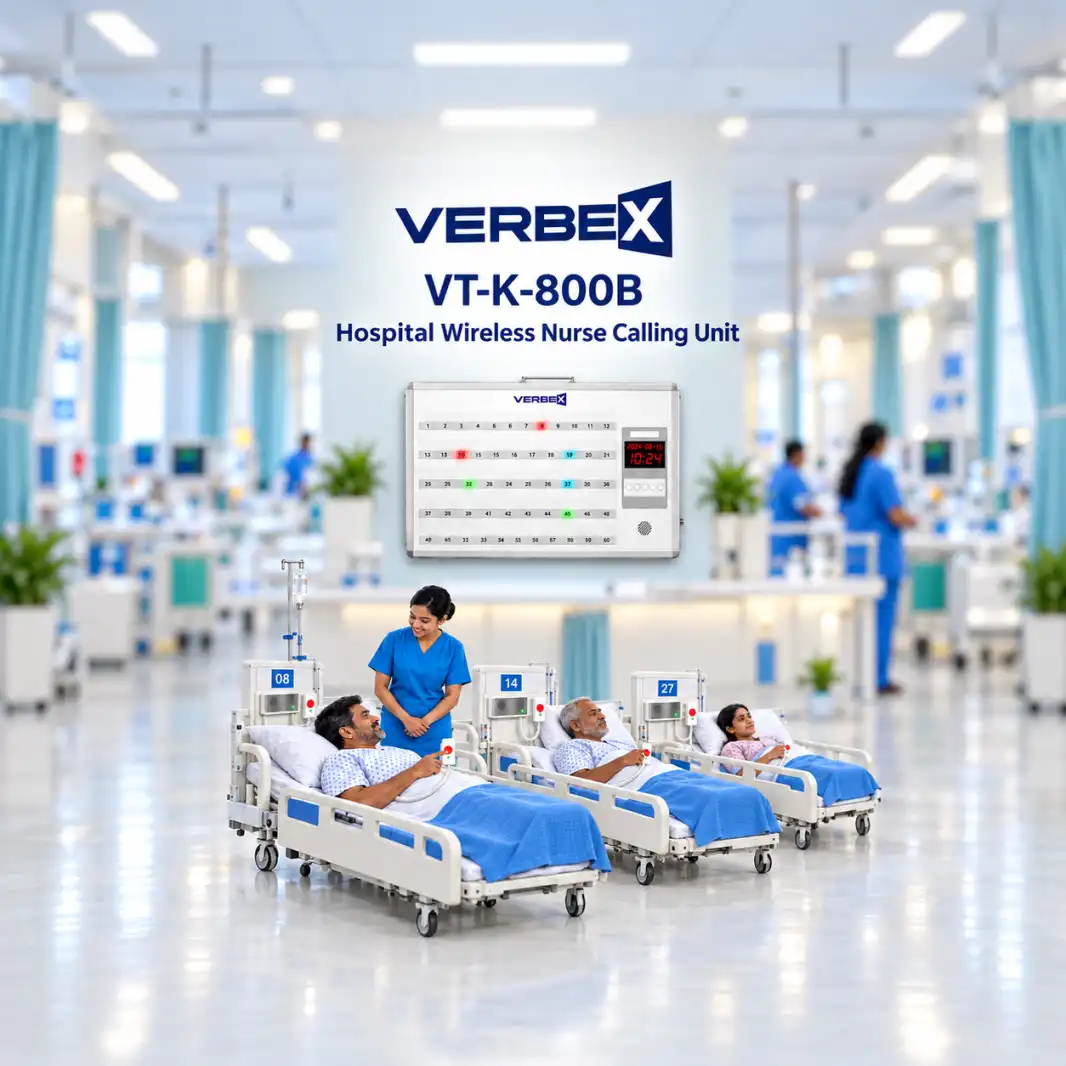
| Verbex VT-K-800B K-300plus K-4L K-CALL-SR-H-plus Patient Bell | Price on request |
| Verbex VT-K-3L K-W3-H 1+3 Caregiver Nurse Call Active Unit | Price on request |
| Verbex VT-K-CALL-SR-H-Plus Patient Active Call Button | Price on request |
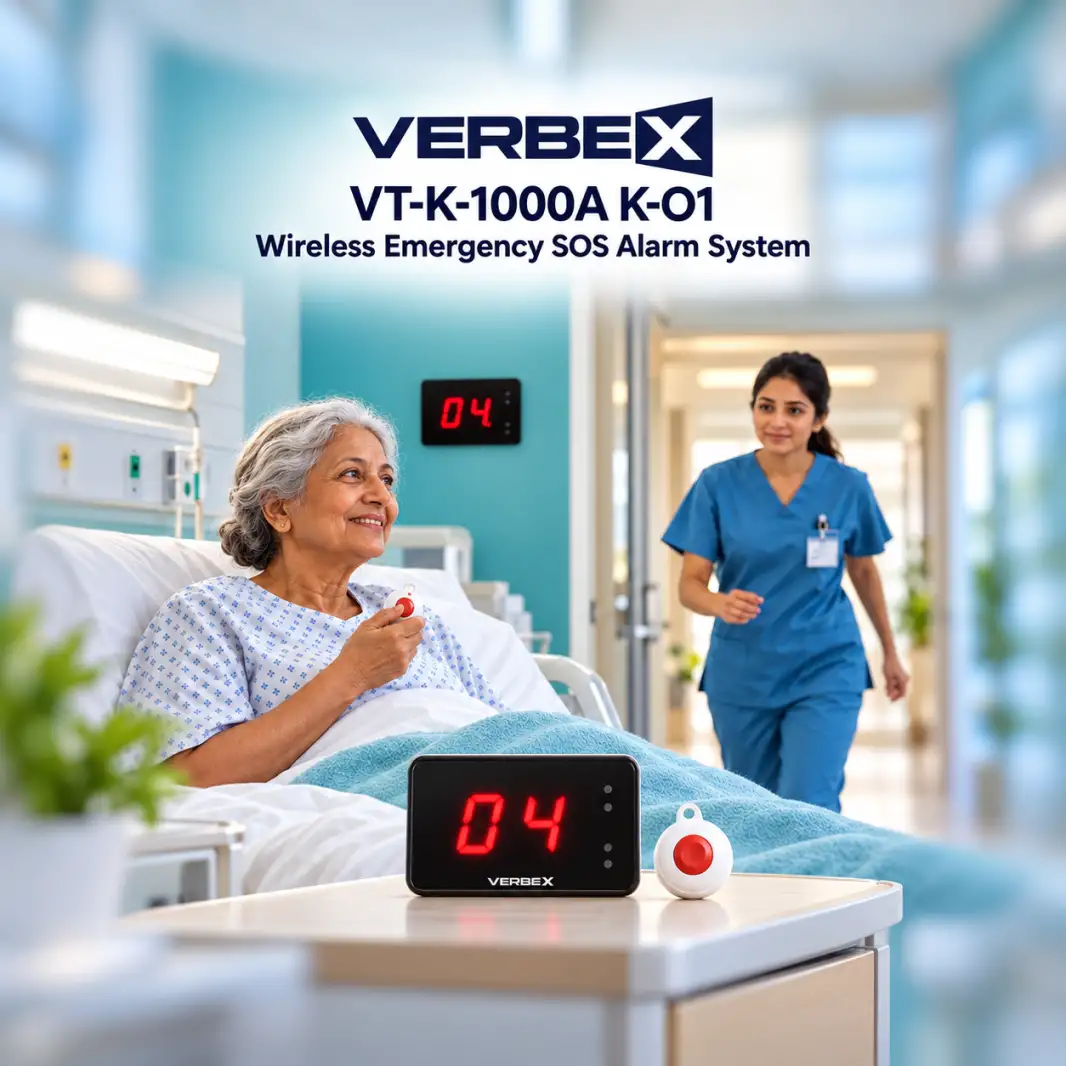
| Verbex VT-K-1000A K-O1 Wireless Emergency SOS Alarm System | Price on request |
| Verbex VT-K-800D Wireless Hospital Active Paging Unit | Price on request |
| Wireless Nurse Calling Hospital Wireless Nurse Calling Unit | Price on request |
| Verbex VT-K-100 Hospital Nurse Calling Pager | Price on request |
| Verbex VT-200 Nurse Alert Lights And Hospital Call Indicator | Price on request |
| Verbex VT-K-HC-H-SOS Nurse Alert Call Button | Price on request |
| Verbex VT-200A Nurse Call Active Display Unit | Price on request |