
 Deal
Verbex
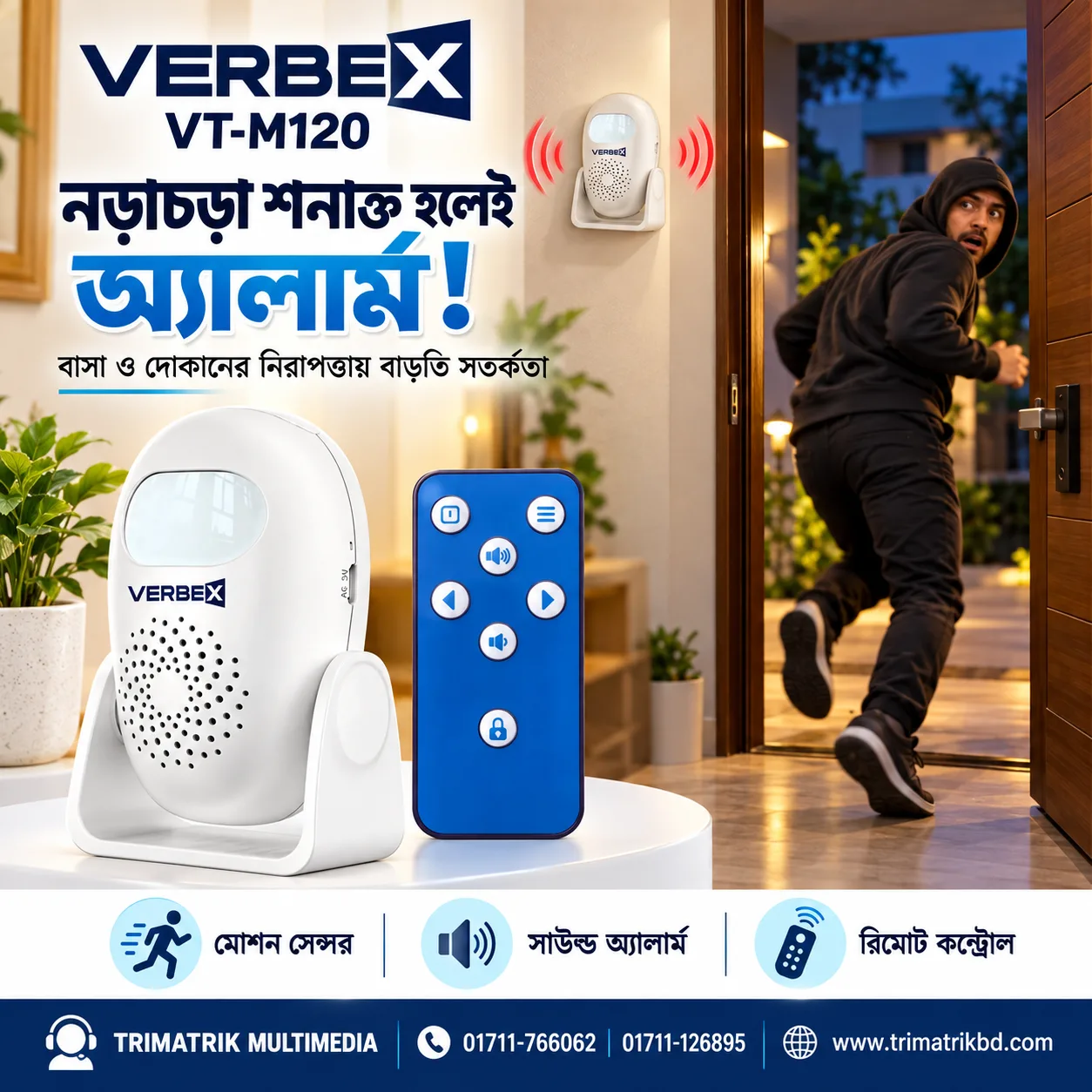
Verbex VT-M120 Security Alarm / PIR Alarm System Motion Sensor Alarm Detector / Motion sensor alarm
- PIR Alarm System
- Motion Sensor Alarm
- Welcome Doorbell
৳1,200
Motion Sensor price in Bangladesh starts from ৳1,200 to ৳3,650; depending on brand, capacity and features. Buy best quality Motion Sensor from renowned brands at the Verbex Bangladesh online shop, and browse below to place an online order.
Explore Verbex Motion Sensors for home security, office monitoring, commercial buildings, warehouses, automatic lighting, and compatible smart automation applications. Depending on the selected technology, motion sensors can detect defined movement or occupancy-related changes and send signals to compatible alarm panels, lighting controllers, or automation systems. Compare available Verbex PIR motion detectors, microwave sensors, dual-technology detectors, wired and wireless options, mounting requirements, detection coverage, power specifications, and verified compatibility to choose a suitable motion sensing solution.
Showing 1 to 10 of 10 products
Deal
Verbex
৳1,200
 Deal
৳990 – ৳1,450

৳1,450
৳1,200
৳3,500
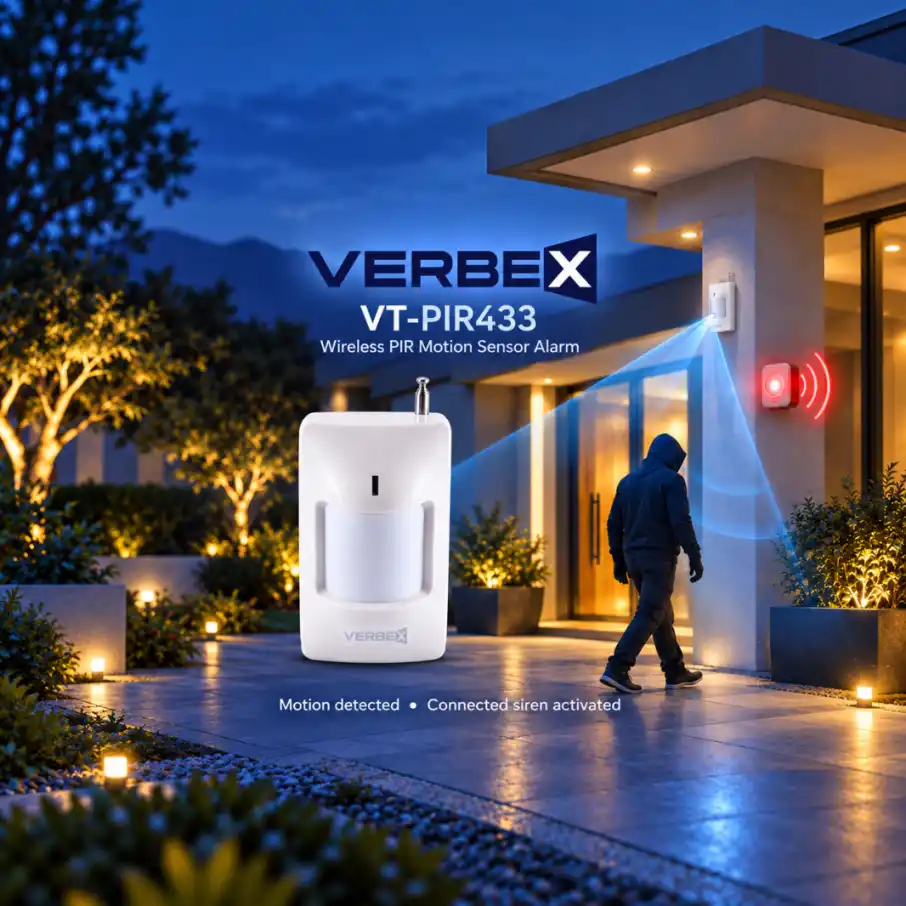
৳2,650
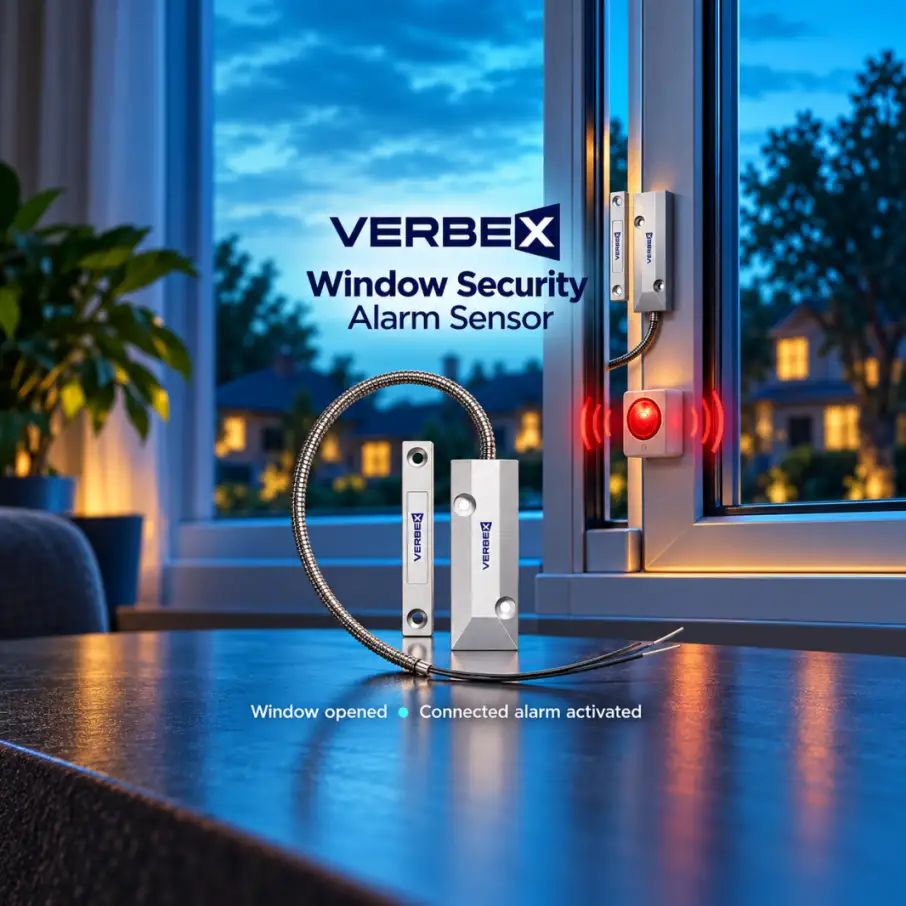
৳3,650
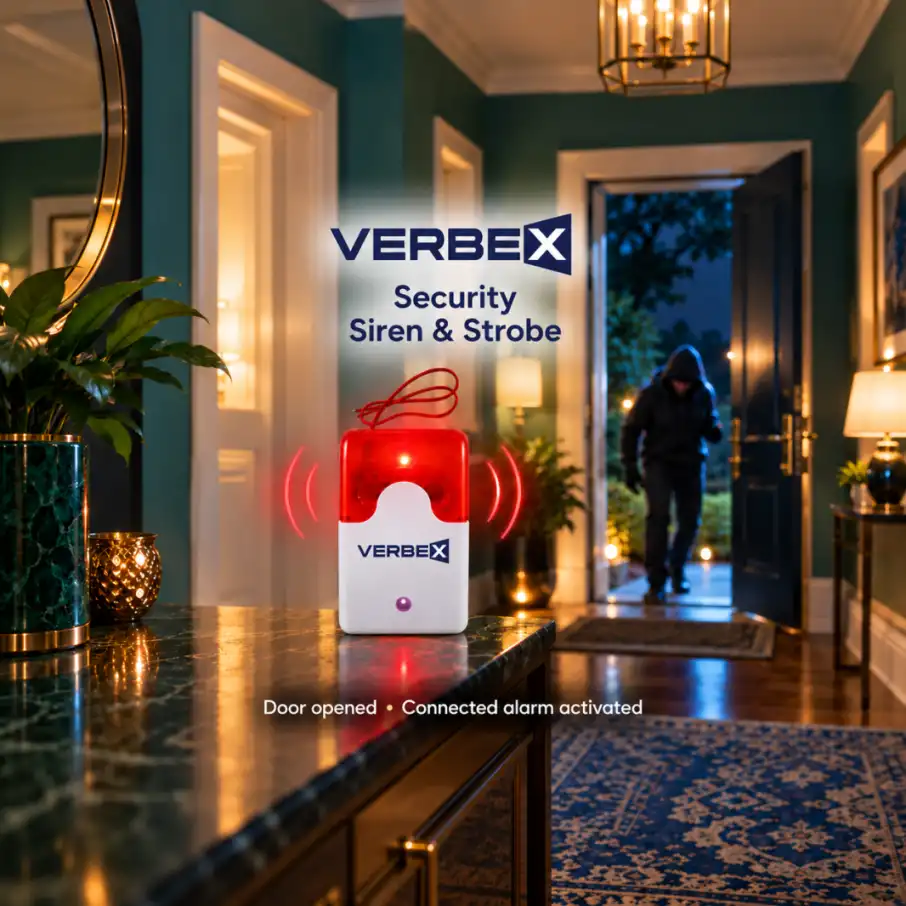
৳2,500

Request a quote
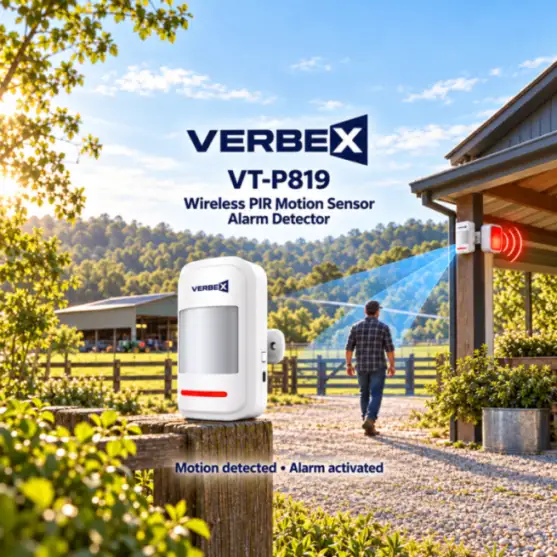
৳3,500
Motion detection technology plays an important role in modern electronic security, automatic lighting, building management, and selected automation applications. Homes, offices, warehouses, shops, and commercial facilities often need equipment that can identify defined movement-related events without requiring continuous manual observation.
A suitable motion sensor can detect certain environmental changes associated with movement and provide an output to compatible equipment.
Verbex Motion Sensor is a professional product category for customers exploring passive infrared motion detectors, microwave sensing devices, dual-technology detectors, security monitoring accessories, and motion-activated control solutions.
Actual capabilities depend on the selected model, sensing technology, installation conditions, and compatible equipment.
A motion sensor is an electronic device designed to detect certain changes associated with movement within a monitored area.
Different sensor technologies use different physical principles.
For example, a passive infrared detector responds to changes in infrared radiation, while a microwave detector uses radio-frequency signals to identify certain movement-related changes.
Not every sensor can identify whether a person is present and stationary.
A motion sensor monitors a defined detection area.
When the selected technology detects a qualifying change, the device may generate an output signal.
A compatible alarm panel, lighting controller, or automation system can then respond according to its configuration.
The sensor itself does not necessarily contain an alarm siren or lighting controller.
Common motion detection technologies include passive infrared, microwave, and dual-technology sensing.
Other specialized approaches may be used in particular applications.
The appropriate technology depends on the environment, intended purpose, and technical requirements.
PIR stands for Passive Infrared.
A PIR sensor detects changes in infrared energy within its monitored field.
It is commonly used in intruder alarm systems and automatic lighting applications.
Detection depends on movement patterns, temperature contrast, lens design, and installation conditions.
Microwave motion detectors transmit radio-frequency signals and analyze changes in returned signals.
They may be used for selected security or automation applications.
Detection characteristics differ from PIR sensors.
Microwave sensing may respond to movement beyond certain nonmetallic materials, depending on the design and environment.
Some detectors combine PIR and microwave sensing.
The technologies may be used together to evaluate movement-related events.
However, the exact detection logic and benefits depend on the model.
Dual-technology devices should not automatically be described as false-alarm-free.
Wired motion sensors connect to compatible equipment using physical cabling.
They may be appropriate for permanent alarm or building automation installations.
Wiring requirements, output types, and operating voltage must match the receiving equipment.
Wireless motion sensors communicate with compatible receivers, alarm panels, or hubs using supported radio protocols.
They can reduce cabling requirements in certain installations.
However, wireless coverage, pairing, interference, battery condition, and protocol compatibility must be considered.
Indoor sensors may be installed in hallways, rooms, offices, and selected circulation areas.
The mounting location should provide appropriate coverage without unnecessary exposure to environmental disturbances.
Not every indoor sensor is suitable for outdoor use.
Outdoor sensors must be designed for the environmental conditions at the installation location.
Rain, sunlight, temperature changes, vegetation, and moving objects can affect detection.
Outdoor suitability and ingress protection ratings should be verified.
Motion sensors may support residential intrusion detection by monitoring selected internal areas.
A compatible alarm system can respond when the sensor triggers under defined conditions.
Motion sensors should complement appropriate door locks, access control, and other security measures.
Offices may use motion detectors in selected rooms, corridors, or restricted areas.
These devices can form part of an electronic intrusion detection arrangement.
The configuration should consider working hours and authorized movement.
Retail stores may use motion sensors to monitor selected areas outside operating hours.
However, an ordinary motion sensor does not determine whether someone is stealing merchandise.
Retail anti-theft applications may require different technologies.
Warehouses often contain large areas, shelves, and equipment.
Sensor selection should consider coverage requirements, obstructions, mounting height, and environmental conditions.
Professional assessment may be necessary for complex facilities.
Commercial buildings may use motion detection for security, lighting, and building management.
Different applications may require different sensors and controllers.
Compatibility should be confirmed before installation.
A compatible motion sensor can trigger lighting equipment when qualifying movement is detected.
This may be useful in corridors, stairways, entrances, and selected utility spaces.
Actual energy savings depend on occupancy patterns, control settings, and lighting equipment.
Motion-activated lighting may help illuminate selected circulation areas when movement occurs.
However, lighting arrangements must meet applicable safety and emergency illumination requirements.
Automatic controls should not compromise safe evacuation.
Some motion sensors can communicate with compatible smart home hubs or controllers.
They may be used to initiate programmed actions.
However, Wi-Fi, Zigbee, Z-Wave, Bluetooth, or other protocol support must be verified for each model.
Motion sensing and occupancy sensing are related but not identical.
Some sensors may fail to detect a person who remains still.
Applications requiring reliable presence detection may need specialized technology.
Detection range indicates the distance over which a sensor may respond under specified conditions.
Actual performance can vary with installation height, movement direction, temperature, and obstructions.
Published range should be interpreted according to the manufacturer's test conditions.
A sensor's detection angle influences the monitored area.
Wall-mounted and ceiling-mounted devices may have different coverage patterns.
The exact field of view depends on lens design and installation.
Correct mounting height is important for reliable operation.
Installing a sensor above or below its recommended position can alter detection performance.
Manufacturer instructions should be followed.
Some motion sensors allow sensitivity adjustment.
This may help adapt the device to certain environments.
However, adjustment options and their effects vary by model.
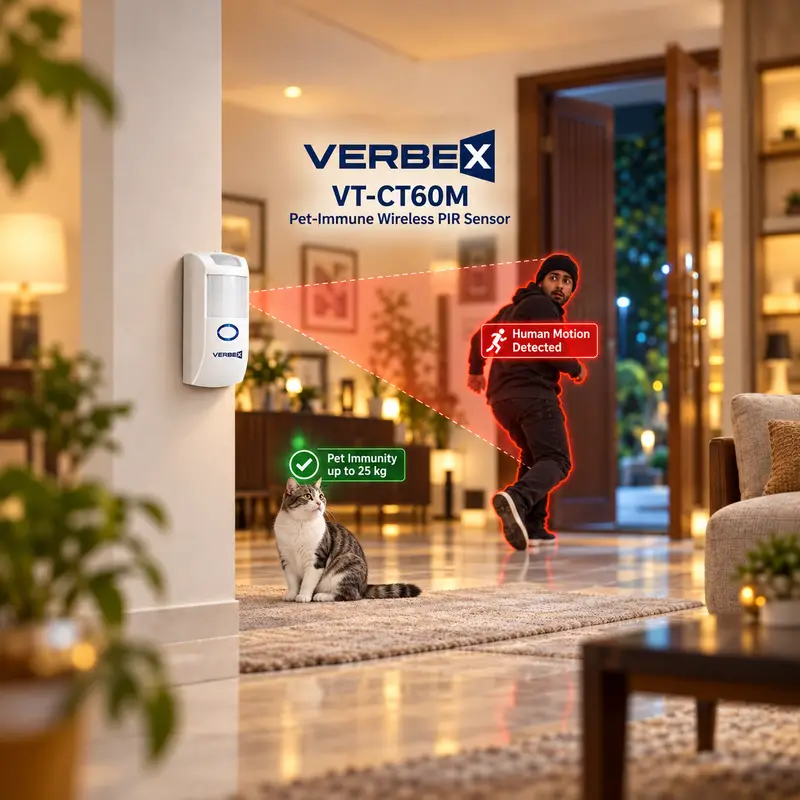
Certain motion detectors are designed to reduce triggering from pets under specified conditions.
This capability is model-dependent.
Pet immunity is not a guarantee that animals will never trigger an alarm.
Unwanted triggering may result from environmental conditions, incorrect placement, movement of objects, or unsuitable settings.
Proper selection, installation, and maintenance can help reduce false alarms.
No motion sensor should be described as completely false-alarm-free.
Sound level alone does not determine whether a PIR sensor will detect movement.
However, machinery, vibration, heat sources, and other environmental factors may influence different sensor technologies.
The sensing method should match the installation environment.
Motion sensors may use wired power supplies or batteries.
Voltage, current, battery type, and power consumption vary by model.
Only compatible power sources should be used.
Battery-powered wireless sensors may be useful where cabling is difficult.
Battery life depends on the product, usage, communication frequency, and environmental conditions.
Maintenance plans should include battery checks.
Motion detectors are common components of compatible intruder alarm systems.
The alarm panel may process a motion event when the system is armed.
Sensor output and panel input compatibility must be verified.
Some motion sensors support compatible lighting control equipment.
The sensor may provide a signal to a relay, controller, or automation module.
The supported switching arrangement depends on the device.
Installation begins with identifying the intended detection area and operational purpose.
The installer should consider mounting position, power, environmental conditions, and compatible control equipment.
After setup, the sensor should be tested across the intended coverage area.
Routine testing may include checking detection response, physical condition, power, communication, and controller operation.
Sensor lenses should be maintained according to manufacturer instructions.
Faulty devices should be investigated promptly.
Start by identifying whether the sensor is intended for security, lighting, or automation.
Determine the installation environment and required coverage.
Compare verified sensing technology, detection range, detection angle, mounting requirements, output interface, power supply, and system compatibility.
Verbex Motion Sensor is a relevant product category for homeowners, security installers, building managers, retailers, and organizations seeking electronic movement detection equipment.
A properly selected sensor can support security monitoring, motion-triggered lighting, or compatible automation functions.
Explore available Verbex motion detection equipment and choose a solution based on verified specifications and the requirements of your installation.