
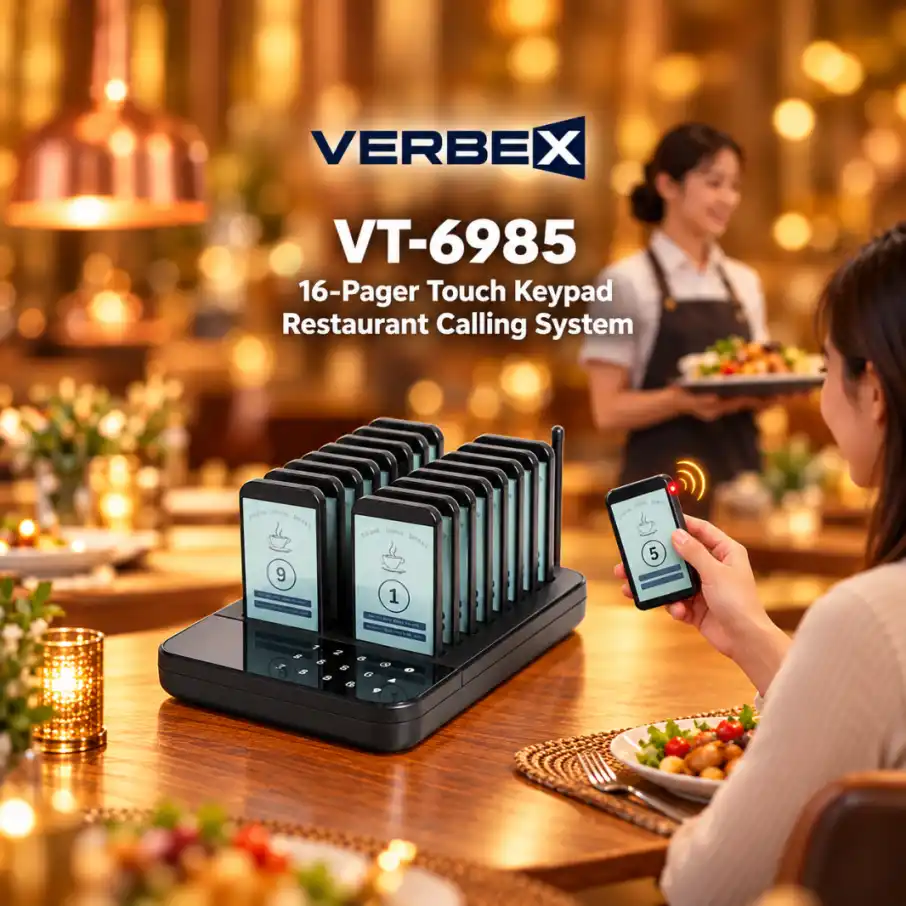
- Touch Keypad Restaurant
- Calling System
- 16-Pagers Touch
৳18,500
Restaurant Calling System price in Bangladesh starts from ৳15,000 to ৳18,500; depending on brand, capacity and features. Buy best quality Restaurant Calling System from renowned brands at the Verbex Bangladesh online shop, and browse below to place an online order.
Explore Verbex Restaurant Calling Systems for restaurants, cafés, food courts, fast-food outlets, hotels, and hospitality service environments. A properly configured wireless calling system can help customers request waiter assistance, support kitchen-to-staff notifications, or alert guests when orders are ready, depending on the selected equipment. Compare available Verbex restaurant calling devices by verified call button functions, receiver compatibility, paging methods, operating range, alert options, power requirements, installation needs, and expansion capabilities to choose a suitable restaurant service communication solution.
Showing 1 to 12 of 28 products
৳18,500

Request a quote
Request a quote

Request a quote

Request a quote

Request a quote
Request a quote

Request a quote
Request a quote
Request a quote

Request a quote
Restaurants and hospitality businesses depend on timely communication between customers, waiters, kitchen staff, and service managers. A customer may need assistance at a dining table, kitchen employees may need to notify servers that an order is ready, and takeaway customers may be waiting for their food.
When these interactions depend entirely on verbal calls or staff continuously checking every area, service coordination can become difficult, especially during busy periods.
A properly selected restaurant calling system can support more organized communication through compatible call buttons, receivers, pagers, and notification devices.
Verbex Restaurant Calling System is a professional service communication equipment category for restaurants, cafés, food courts, hotels, fast-food outlets, and other hospitality environments.
The actual functions depend on the system design, communication technology, and compatibility of the selected products.
A restaurant calling system is an electronic communication solution that helps customers, service staff, or kitchen personnel send notifications to designated receivers.
A common application is a table-mounted button that allows a customer to request waiter assistance.
Other applications include kitchen calling and guest paging.
These are related but not identical system types.
The equipment should be selected according to the restaurant's service workflow.
In a typical wireless waiter calling setup, a customer presses a call button located on the dining table.
The transmitter sends a signal to a compatible receiving device.
Depending on the system, the receiver may display a table identifier, produce an audible alert, or activate another supported notification.
A staff member can then respond to the request.
The precise communication method depends on the selected model.
Not every system supports confirmation messages or two-way communication.
Restaurant calling equipment may include table call buttons, wireless display receivers, portable staff receivers, guest pagers, charging stations, and kitchen transmitters.
Some installations use a central receiver.
Others distribute notifications to portable devices carried by staff.
Different components may use different wireless technologies.
Compatibility between transmitters and receivers must be verified before purchasing.
A wireless waiter calling system allows customers to request assistance without repeatedly calling out to restaurant staff.
The system may help organize service requests across multiple tables.
Waiters can respond based on the notifications received.
However, the system does not automatically guarantee faster service.
Staff availability, training, table allocation, and response procedures remain important.
A table call button is a small device positioned where customers can access it.
When activated, it sends a request through a compatible communication system.
Some products offer a single calling function.
Other designs may include multiple buttons for different service requests.
The available functions should be checked against the actual product specification.
A receiver display may show the table or transmitter identifier associated with an incoming request.
This can help staff identify where assistance is needed.
Display capacity, viewing distance, audible alerts, and notification history vary by product.
Restaurants should select a receiver appropriate for their service counter and operating environment.
Some restaurant calling platforms support portable receivers carried by staff members.
These devices may provide alerts without requiring employees to remain near a fixed display.
Depending on the model, notifications may use sound, light, or vibration.
Portable receiver compatibility, battery requirements, and alert behavior should be verified.
A guest paging system is commonly used to notify customers when their food or order is ready.
Customers receive a compatible pager after placing an order.
The service counter activates the appropriate pager when the order is ready for collection.
This workflow can be useful in quick-service restaurants and food courts.
Guest paging equipment should not be confused with a table-to-waiter calling system.
Guest pagers may be stored in a dedicated charging station.
Some pager systems use numbered devices.
Others may support different alert patterns.
The number of pagers, charging method, alert range, and operating time depend on the model.
Restaurants should confirm the practical number of devices supported by the selected base station.
Kitchen staff may need to notify servers when prepared meals are ready.
A compatible kitchen calling solution can help send these notifications to designated receivers.
This may reduce the need for staff to repeatedly check the kitchen.
However, kitchen paging functions require suitable transmitters and receivers.
Not every restaurant calling product supports this workflow.
Service communication can become difficult when dining areas are large or staff are handling several tables.
A calling system may help make customer requests more visible to the service team.
However, operational efficiency depends on how notifications are managed.
Restaurants should establish clear procedures for receiving, assigning, and completing service requests.
Customers often appreciate being able to request assistance without attracting attention across a dining room.
A suitable calling button can offer a discreet method of contacting staff.
However, electronic notification should complement attentive hospitality rather than replace it.
Staff should continue checking tables and responding proactively.
Full-service restaurants may use table calling systems to organize requests for assistance.
The equipment should match the restaurant's interior design and service style.
Discreet buttons and carefully positioned receivers may be appropriate.
Managers should consider whether electronic calling improves the intended dining experience.
Cafés may have counter-service, table-service, or mixed operating models.
A guest paging system may suit customers waiting for prepared drinks.
A waiter calling system may be relevant where table service is offered.
The appropriate solution depends on how orders are placed and delivered.
Quick-service restaurants often process numerous orders during peak periods.
Guest pagers can provide a notification method when customers need to collect completed orders.
The system should be easy for staff to operate and customers to understand.
Pager storage, charging, and return procedures are important.
Food courts often contain multiple vendors and shared seating areas.
Guest paging can help customers wait away from individual counters.
However, nearby wireless systems may create compatibility or interference considerations.
Vendors should assess operating range and device management requirements.
Hotels may use restaurant calling equipment in dining areas, cafés, and suitable service zones.
Different outlets may have different operational requirements.
A hotel restaurant might prioritize discreet waiter calls.
A casual takeaway counter may benefit more from guest paging.
The system should be selected according to each service environment.
Outdoor seating can increase the distance between customers and service counters.
Wireless calling may help notify staff when assistance is requested.
However, outdoor use introduces exposure to moisture, dust, temperature changes, and signal obstructions.
The equipment must have a verified environmental rating suitable for its installation conditions.
Operating range is an important consideration for wireless calling systems.
Published range figures may be measured under open or controlled conditions.
Walls, metal structures, electrical equipment, and building layout can affect performance.
A site test is preferable before purchasing equipment for large or complex premises.
Wireless calling equipment may operate on different radio technologies or frequency bands.
Local regulatory requirements may apply.
Interference from other devices can affect reliability.
Customers should verify the operating frequency and legal suitability of the selected equipment in their country.
A small café and a large restaurant may require different numbers of call buttons.
The receiver must support the intended number of transmitters.
Some systems also have limits on receiver groups or paging devices.
Expansion should be considered before purchase.
Maximum supported capacity must be confirmed from the manufacturer's documentation.
When multiple tables use calling buttons, staff need to know which table initiated a request.
Some receivers display a number or other assigned identifier.
Correct labeling and device registration are important.
Restaurants should maintain accurate records of button-to-table assignments.
This can help avoid confusion after furniture rearrangement.
Different restaurant environments may require different notification methods.
An audible alert may be useful at a busy service counter.
A visual display may be preferable in a quieter dining area.
Portable vibration alerts may be appropriate where supported.
Not all systems provide every alert method.
Table transmitters may use replaceable or rechargeable batteries, depending on the design.
Receiver displays may require external power.
Guest pagers may use dedicated charging equipment.
Battery life varies with device design, alert frequency, and operating conditions.
Restaurants should plan routine charging and battery replacement procedures.
Restaurant equipment is exposed to spills, food residue, and frequent cleaning.
Some calling devices may offer moisture-resistant construction.
However, waterproofing should never be assumed.
The product's verified ingress protection rating and cleaning instructions should guide use.
Avoid immersing devices unless explicitly approved by the manufacturer.
Restaurant calling equipment should be installed according to the seating layout and service workflow.
Call buttons need clear table assignments.
Receivers should be positioned where staff can notice alerts.
The installer should test communication from all intended areas.
Staff should receive practical training before the system is placed into routine service.
A restaurant calling system works best when employees understand the notification process.
Staff should know which device corresponds to each table.
They should also understand how to acknowledge or clear calls if the system supports those functions.
Managers should establish a response procedure.
Periodic training can help maintain consistent service.
Routine maintenance should include checking buttons, receiver operation, batteries, and charging stations.
Devices should be cleaned according to manufacturer instructions.
Damaged equipment should be repaired or replaced appropriately.
When a call is not received, check power, pairing, signal coverage, and compatibility.
Some restaurant technology platforms may support integration with point-of-sale or order management systems.
However, ordinary wireless calling devices do not automatically connect to POS software.
Integration requires verified interfaces and compatible applications.
Restaurants should request technical documentation before planning such functionality.
Start by identifying the primary service requirement.
Determine whether the business needs waiter calling, guest paging, kitchen notifications, or a combination of these functions.
Count the tables, staff receivers, or customer pagers required.
Evaluate verified wireless range, capacity, alert methods, battery requirements, installation conditions, and device compatibility.
For larger premises, testing the system in the actual environment is advisable.
Verbex Restaurant Calling System is a relevant product category for hospitality businesses looking to organize waiter requests, kitchen communication, and customer paging.
A properly selected solution can help make service notifications clearer and easier to manage.
Explore available Verbex restaurant calling equipment, compare verified specifications, and choose a system that supports your restaurant's service workflow.
| Product | Price |
|---|---|
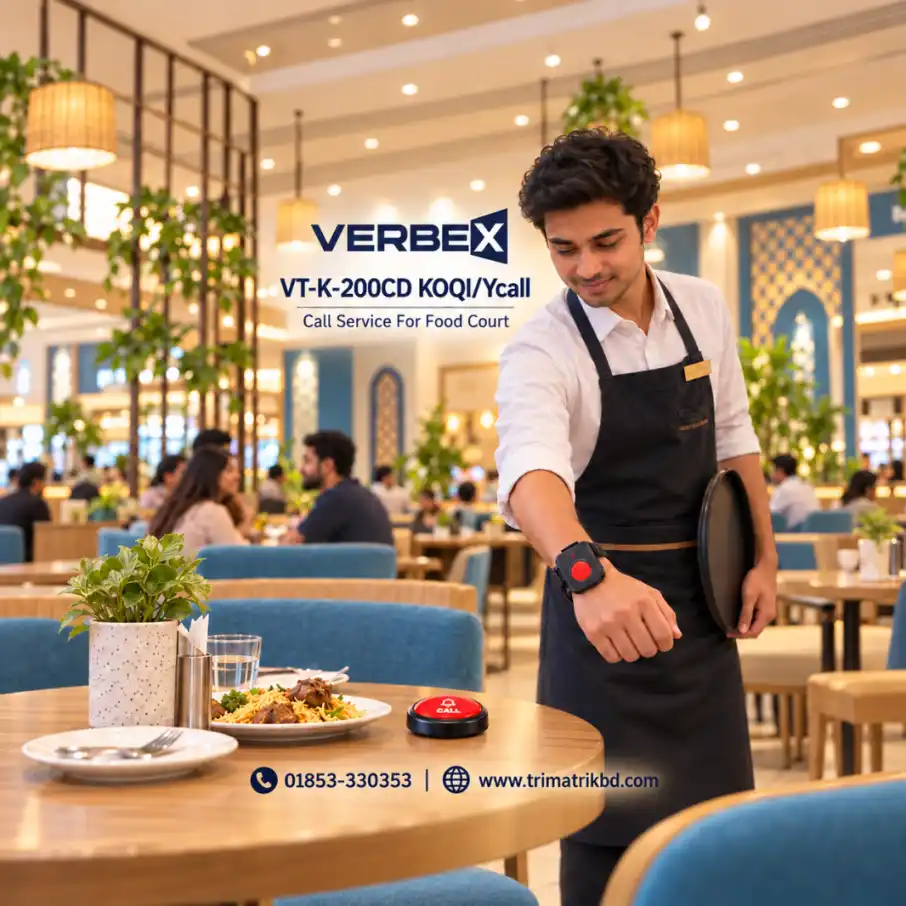
| calling system Calling Bell For Food Court | Price on request |
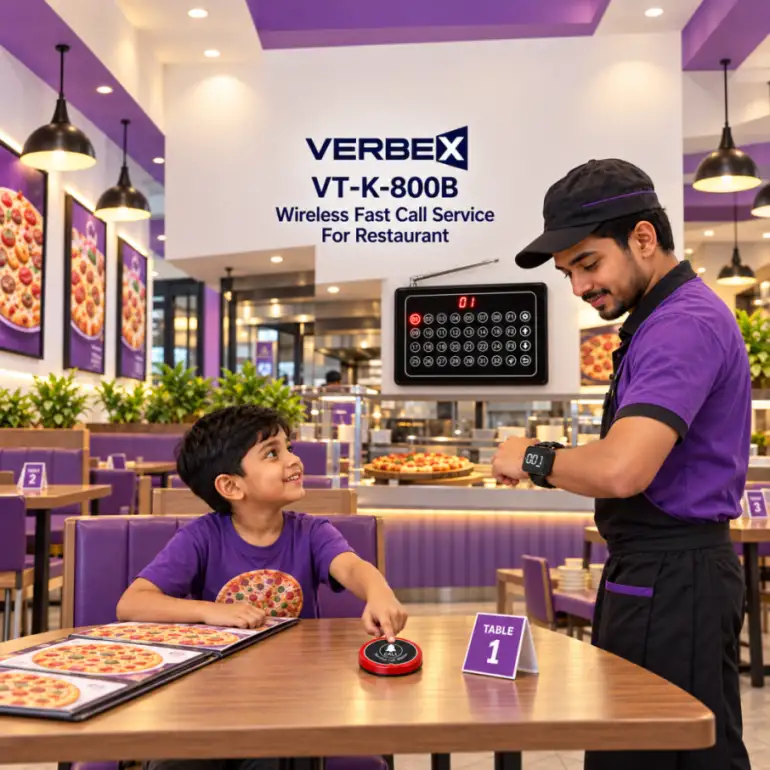
| Verbex VT-K-800B Wireless Restaurant Call Service | Price on request |
| Verbex VT-6985 16-Pagers Touch Keypad Restaurant Waiter Calling System | ৳18,500 |
| Verbex VT-6810 Touch Keypad Restaurant Service Call Bell System | ৳18,000 |
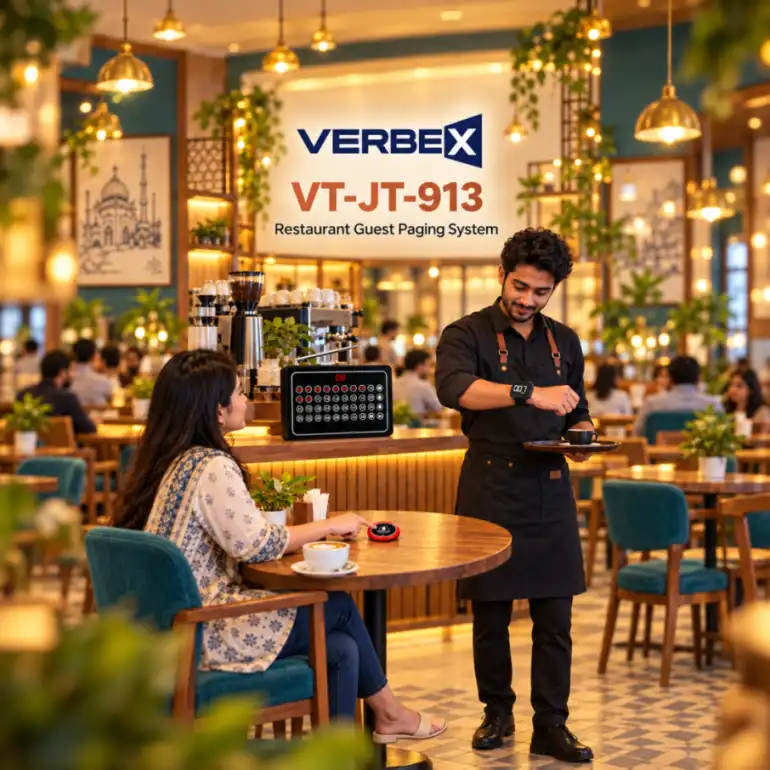
| Verbex VT-JT-913 18 Pagers Restaurant Guest Paging System | Price on request |
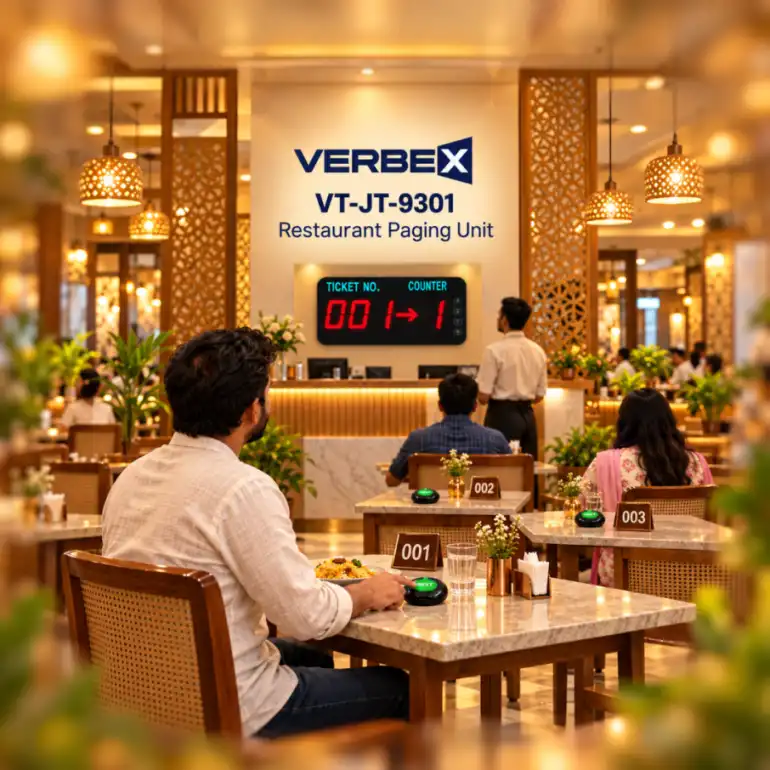
| Verbex VT-JT-9301 Coaster Restaurant Paging Unit | Price on request |
| Verbex VT-JT-916 16 Wireless Restaurant Guest Paging System | Price on request |
| Verbex VT-K-800A Wireless Call Unit For Restaurant | Price on request |
| Verbex VT-K-700C Wireless Call Unit For Restaurant And Food Court | Price on request |
| Verbex VT-K-800B Wireless Fast Call Service For Restaurant | Price on request |