
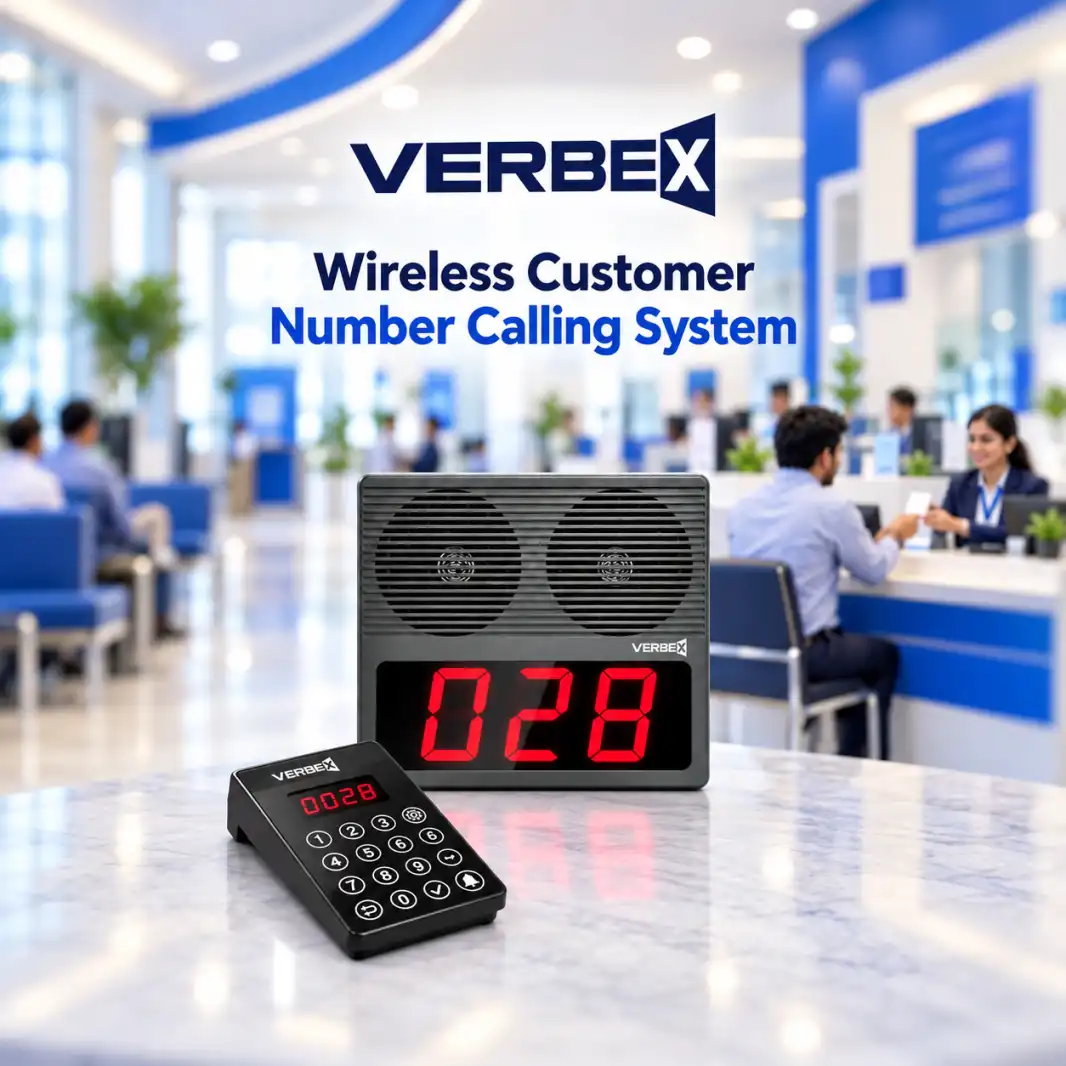
- Wireless Custome
- Calling System
- Queue Management System
Request a quote
Looking for the latest Queue call system price in Bangladesh? Prices depend on brand, capacity and features. Browse the range below and ask Verbex Bangladesh for a quotation on the products you need.
Explore Verbex Queue Call Systems for organized customer calling and queue management in banks, hospitals, clinics, pharmacies, government offices, service centers, and retail counters. A compatible queue calling solution can help staff call waiting customers, display token numbers, and direct visitors to designated service counters. Compare available Verbex queue calling equipment by verified token display functions, calling controls, receiver compatibility, audible alerts, counter identification, wireless coverage, power requirements, and installation options to choose a suitable queue communication solution.
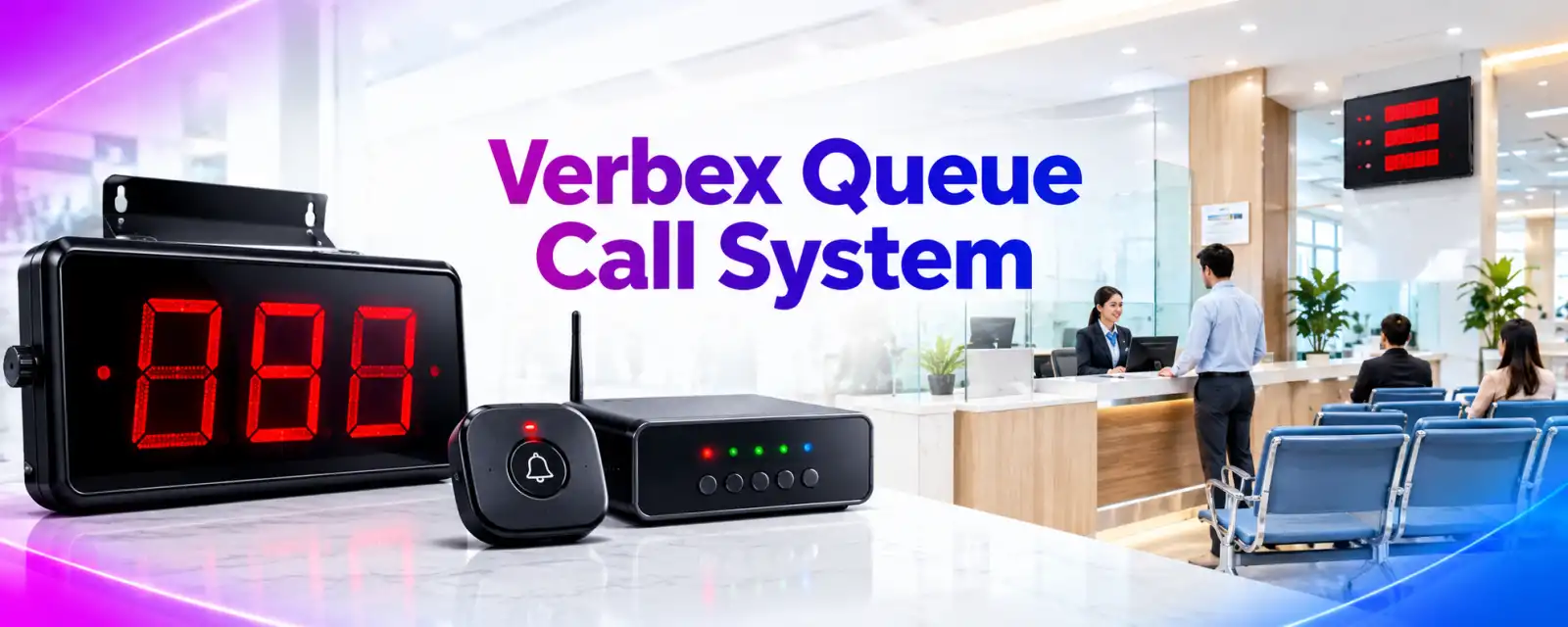
Showing 1 to 12 of 31 products
Request a quote
Verbex
Request a quote
Request a quote

Request a quote

Request a quote

Request a quote

Request a quote

Request a quote

Request a quote
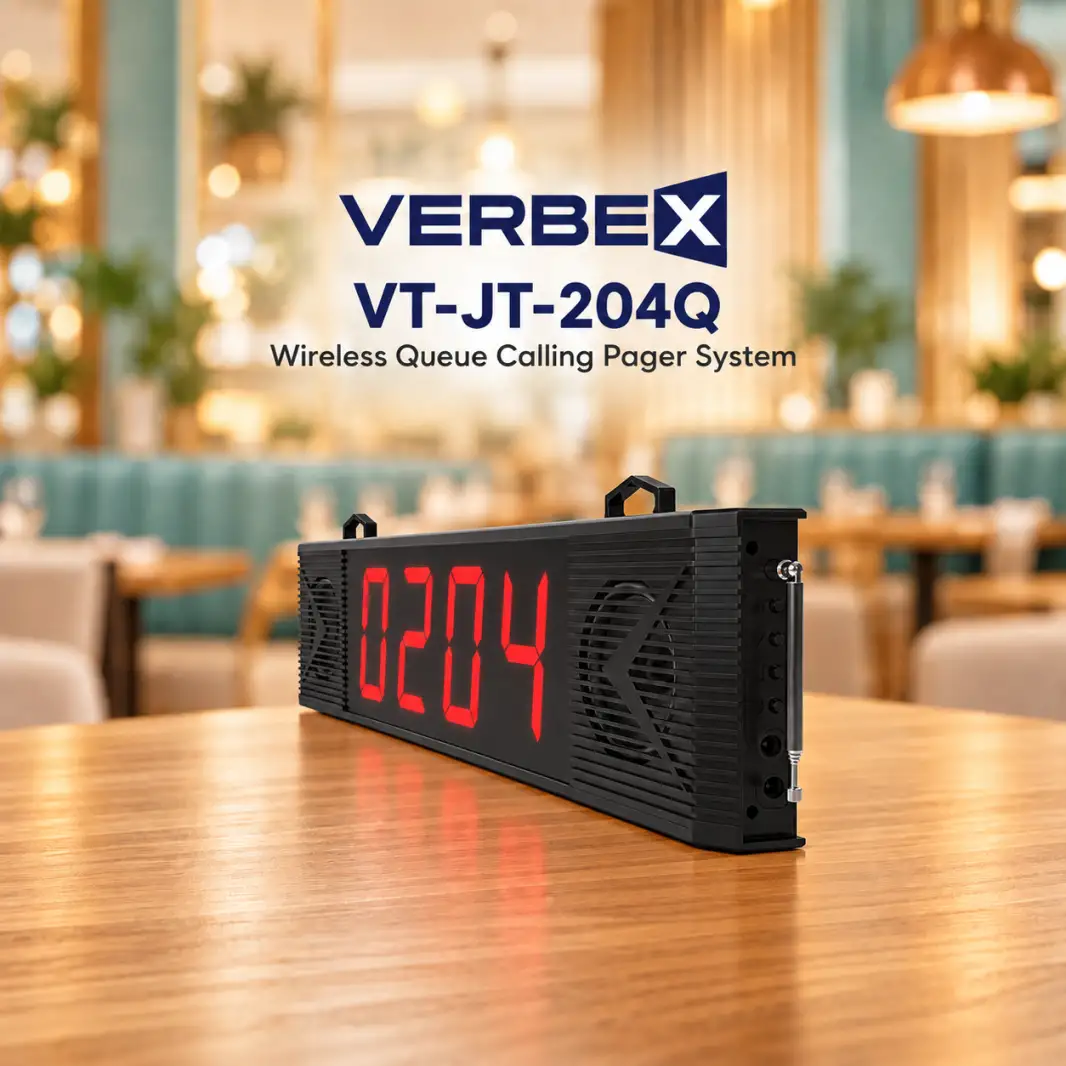
Request a quote

Request a quote
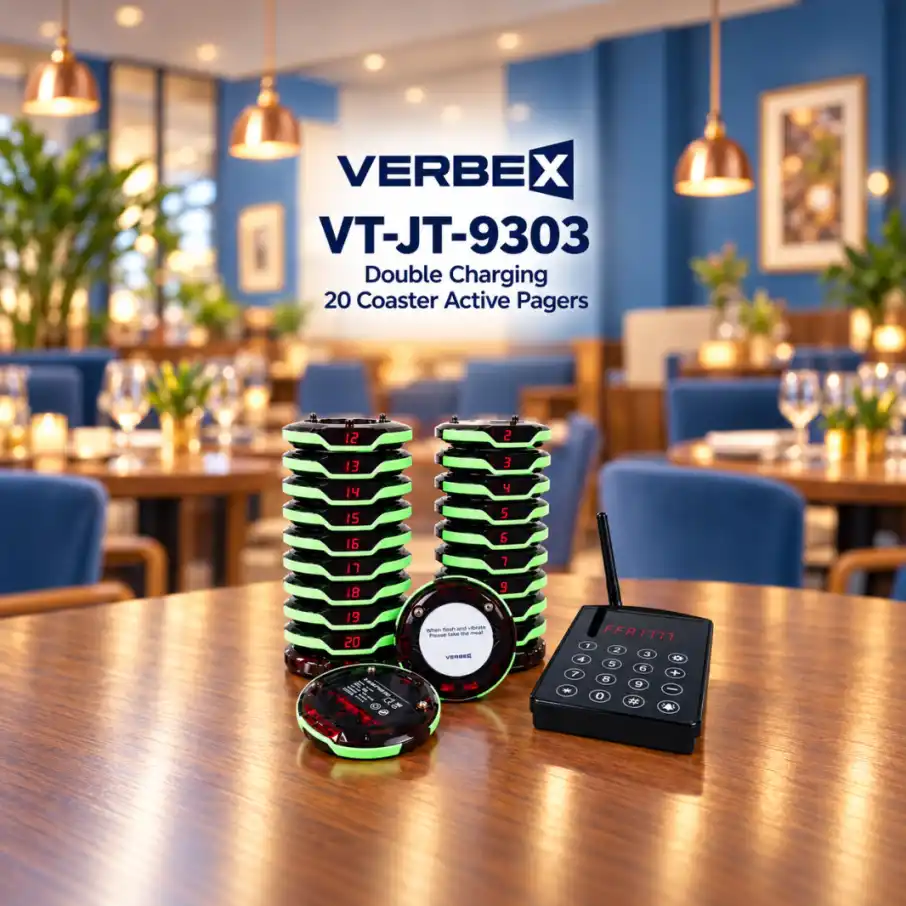
Request a quote
Managing customer queues efficiently is an important part of service delivery in banks, hospitals, clinics, pharmacies, government offices, and commercial service centers. When many visitors arrive at the same time, staff need a clear method for identifying who should be served next and where that person should go.
Without an organized calling process, customers may crowd around counters, miss verbal announcements, or become confused about their turn. Employees may also spend additional time repeating token numbers and directing visitors.
A properly selected queue call system can support more organized communication between service staff and waiting customers.
Verbex Queue Call System is a professional customer calling and queue communication equipment category for organizations seeking token displays, counter calling controls, wireless queue notification devices, and related service solutions.
Actual functions depend on the selected products, system architecture, and compatibility.
A queue call system is an electronic solution used to notify waiting customers when it is their turn to receive service.
In a typical token-based arrangement, a customer receives or is assigned a queue number.
When a service counter becomes available, an employee activates a calling control.
A compatible display or announcement device then identifies the number being called.
Different systems may use different calling methods.
A basic setup may include a counter calling button, a control unit, and a token number display.
When a staff member is ready for the next customer, the calling control sends a request to the system.
The display presents the relevant token number.
Some systems may also provide an audible alert or voice announcement.
However, automatic numbering, audio announcements, and counter routing depend on the product.
Queue calling equipment may include wireless call buttons, counter keypads, LED token displays, receiver controllers, audible notification devices, and suitable power accessories.
Larger solutions may incorporate ticket printers or queue management software.
These components are not necessarily included in every system.
Compatibility must be confirmed before combining devices.
A queue calling button allows authorized staff to initiate a customer notification.
It may be positioned on a service desk or counter.
Some devices support a single calling function.
Other models may provide additional controls.
The available functions should be verified against the actual product specification.
A token display provides a visual indication of the queue number being called.
Depending on the design, it may use LED digits or another supported display technology.
Readability depends on character size, brightness, viewing distance, and installation position.
The display should be visible from the intended waiting area.
Some queue calling platforms use wireless communication between the counter control and receiving equipment.
Wireless technology may simplify installation where running communication cables is difficult.
However, signal performance depends on the selected technology and building environment.
Coverage should be tested before deployment.
A receiver or control unit may coordinate incoming calls and connected displays.
Its functions depend on the system architecture.
Some controllers may support multiple input devices or display outputs.
Others may be designed for a simpler configuration.
Device capacity and compatibility must be verified.
Calling the next customer is a central function of many queue management arrangements.
When a service position becomes available, staff activate the appropriate control.
The system then displays or announces the next assigned token according to its supported workflow.
However, not every calling device automatically generates sequential numbers.
Some queue systems provide a recall function that allows staff to repeat a previously issued notification.
This can be useful when a customer does not notice the initial call.
Recall availability and behavior vary by model.
Organizations should confirm whether the selected equipment supports this function.
An audible alert can draw attention to a new token call.
Some systems use a tone or chime.
Others may support spoken announcements.
The appropriate alert method depends on the environment and supported hardware.
Volume should be comfortable and suitable for the waiting area.
Some advanced queue calling platforms can announce token or counter numbers through speakers.
This may help visitors who are not watching a display.
However, voice announcements require compatible equipment and may depend on supported languages.
A standard token display should not automatically be assumed to provide speech output.
Large organizations may operate several service counters.
A suitable multi-counter system can help direct customers to the appropriate location.
However, support for multiple counters is not universal.
The number of supported counters, routing method, and display arrangement must be verified.
When several service counters are active, customers may need to know both their token number and destination counter.
Some systems display both identifiers.
Other configurations may require separate signage.
The organization should select equipment that matches its service layout.
Banks frequently manage queues for teller services, customer assistance, and other transactions.
A queue calling system may help organize customer movement between waiting areas and counters.
Different banking services may require separate queues or priorities.
Such advanced workflows need suitable system functionality.
Hospitals may use queue calling equipment at registration, billing, outpatient reception, and other service points.
A clear token display can help visitors identify when to approach a counter.
However, patient privacy and accessibility should be considered.
Sensitive medical information should not be unnecessarily exposed through public announcements.
Clinics often manage appointment arrivals and walk-in visitors.
A queue calling system may support the notification process.
However, an electronic calling device does not automatically provide appointment scheduling or clinical triage.
Those functions require separate procedures or compatible software.
Pharmacies may use token calling to organize prescription collection and payment counters.
A display or audible notification can indicate when a customer should approach.
Staff should continue verifying the correct recipient and prescription.
Queue calling equipment does not replace pharmacy safety procedures.
Government offices often serve large numbers of visitors across several desks.
Queue calling can help communicate turn order.
The appropriate setup depends on service categories, counter availability, and waiting area design.
Advanced priority handling should be verified if required.
Telecommunication offices, utility service centers, and other customer support facilities may use queue calling systems.
The equipment can provide a visible method for notifying customers.
However, service quality also depends on staffing, queue policies, and operational management.
Retail service desks, collection counters, and payment offices may use token-based customer calling.
A simple queue display may be sufficient for some locations.
Other facilities may require multiple counters or additional notification methods.
The system should reflect actual visitor volume.
A clear calling system may reduce uncertainty about whose turn is next.
Customers can monitor a display or listen for a supported alert.
However, queue calling does not automatically reduce waiting time.
Actual waiting duration depends on service capacity and operational efficiency.
Token displays should be positioned where customers can see them easily.
Screen size, brightness, mounting height, and viewing angle matter.
Large waiting halls may require additional displays.
The number of supported displays must be confirmed.
Some visitors may have visual, hearing, or mobility limitations.
A combination of visual and audible notifications may be helpful where supported.
However, ordinary queue calling equipment may not satisfy all accessibility requirements.
Organizations should assess additional assistance and accessible service procedures.
Wireless signal performance can be affected by walls, metal structures, electrical equipment, and nearby radio devices.
Published range figures may reflect ideal conditions.
The system should be tested from every intended counter location.
Operating frequencies should also comply with applicable local regulations.
Queue displays and controllers may require continuous electrical power.
Some calling buttons may use batteries.
Power requirements vary by device.
Organizations should plan for service continuity during outages where necessary.
Backup power must be selected according to verified equipment requirements.
Some queue management systems include ticket printers that issue numbered tokens.
However, not every queue call system supports a printer.
Ticket printing requires compatible hardware and, in some cases, software.
Organizations should confirm integration before purchasing.
Advanced queue management platforms may support reporting, appointment scheduling, or cloud connectivity.
These features are not inherent to every calling device.
They require compatible hardware, software, and network arrangements.
Data privacy and cybersecurity should also be considered.
Installation should begin with an assessment of service counters and waiting areas.
Calling controls should be placed where staff can operate them conveniently.
Displays should be positioned for customer visibility.
All connected devices should be configured and tested according to manufacturer instructions.
Employees should understand how to initiate calls and manage the supported calling sequence.
If recall or counter selection functions are available, staff should learn how to use them.
Managers should establish procedures for missed calls and customer assistance.
Clear operating rules can help reduce confusion.
Routine maintenance should include checking displays, calling controls, power supplies, batteries, and connections.
If a token does not appear, staff should inspect power, pairing, system configuration, and compatibility.
Damaged devices should be repaired or replaced appropriately.
Regular testing can help maintain reliable operation.
Start by identifying the number of service counters and expected visitors.
Determine whether you need simple token calling, multiple counter identification, audible alerts, or additional queue management functions.
Compare verified display capacity, communication range, calling controls, power requirements, installation options, and compatibility.
For complex premises, test the proposed setup under realistic conditions.
Verbex Queue Call System is a relevant equipment category for banks, hospitals, clinics, pharmacies, government offices, and service centers looking to organize customer notifications.
A properly selected system can help communicate token numbers and direct visitors to the correct service point.
Explore available Verbex queue calling equipment, compare verified specifications, and choose a solution suited to your organization's service workflow.
| Product | Price |
|---|---|
| Verbex VT-K-2000C | Price on request |
| Verbex VT-K-436-B Queue For Hospitals And Clinics | Price on request |
| Verbex VT-K-TP10 Pager System For Restaurant And Factory | Price on request |
| Verbex VT-K-Q13 Queue Perfect For KTV,Pub And Coffee Shop | Price on request |
| Verbex Wireless Customer Number Calling System Queue Management System | Price on request |
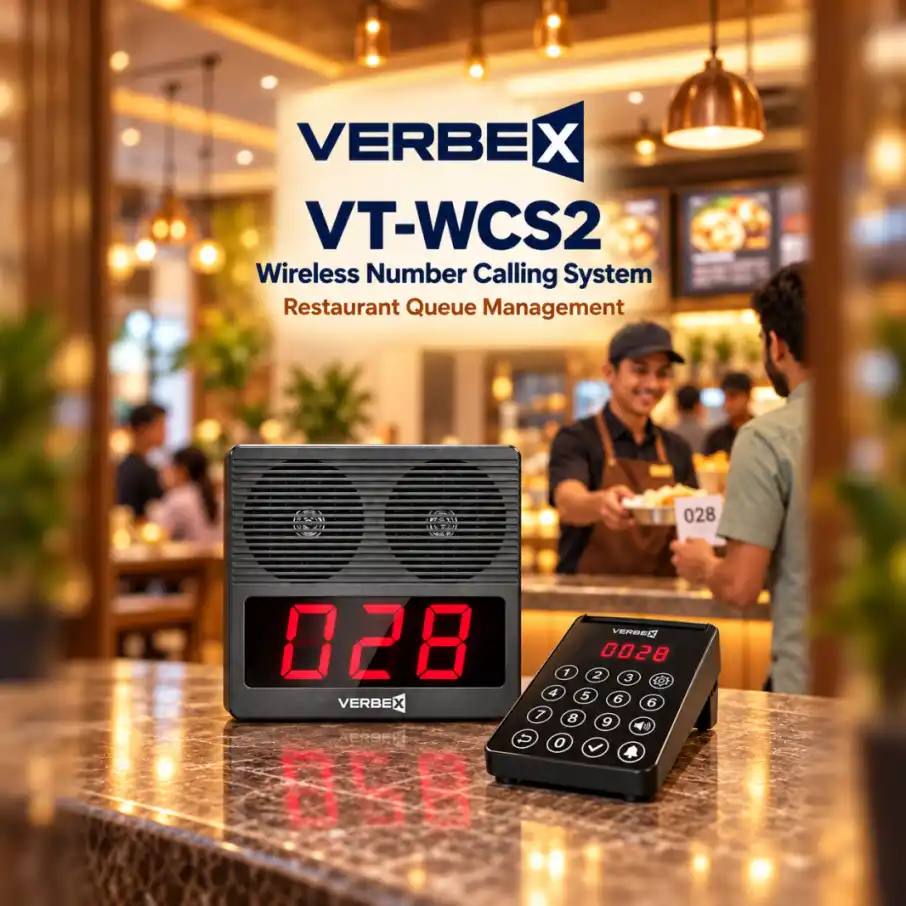
| Verbex VT-WCS2 Number Calling System Wireless Hospital/Restaurant Pager Queue Management System | Price on request |
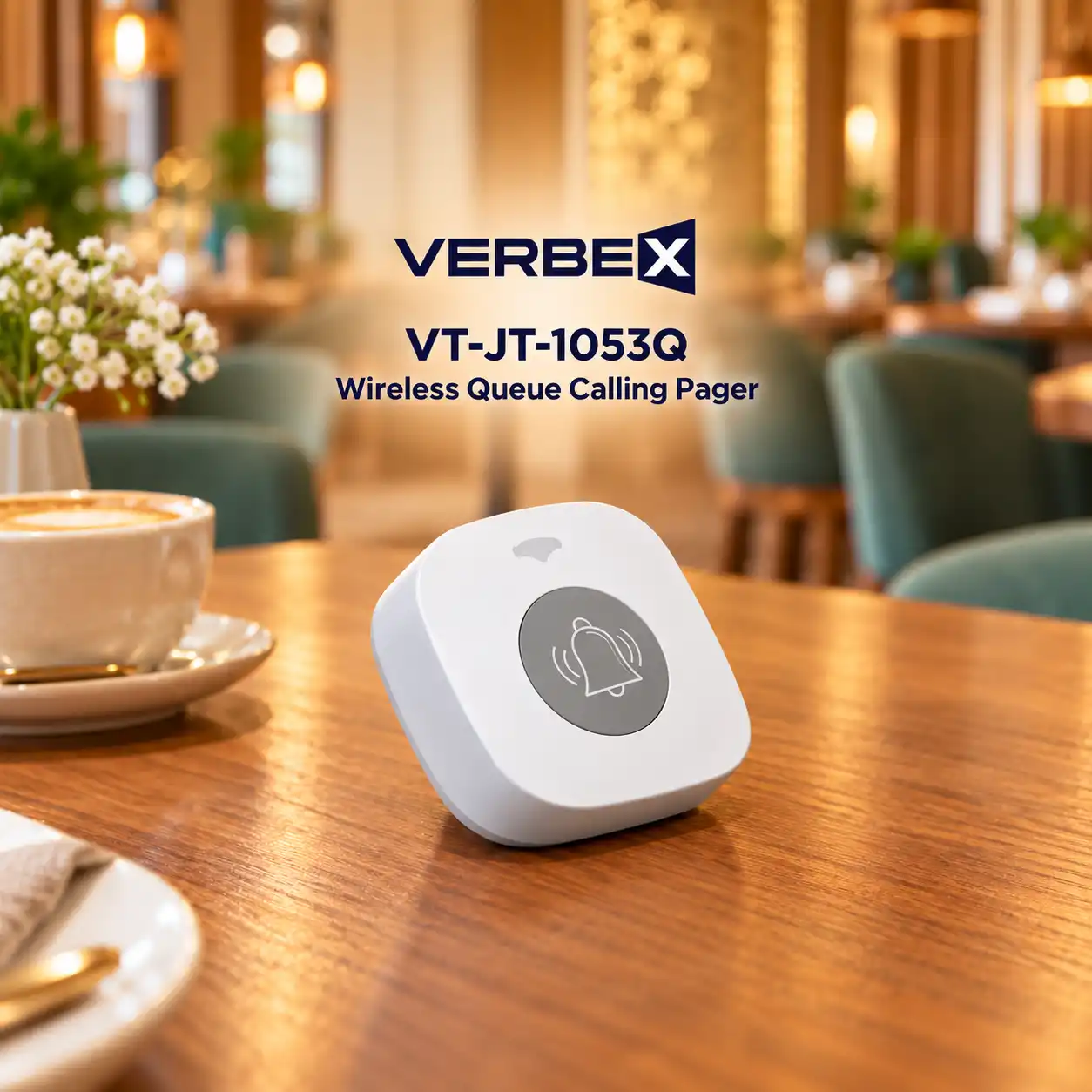
| Verbex VT-JT-1053Q Wireless Queue Calling Pager | Price on request |
| Verbex VT-JT-223Q Wireless Queue Full Setup | Price on request |
| Verbex VT-JT-213Q Wireless Queue Calling Devices | Price on request |
| Verbex VT-JT-1053Q Wireless Queue Active Calling System | Price on request |